
Exploring Kuretake: A Connoisseur’s Buying Guide to Japanese Ink and Artistry
What if your most versatile art tool wasn't a modern invention, but a century-old secret from Nara, Japan? You've likely felt the frustration of staring at a wall of brush pens, unable to tell the difference between a synthetic hair tip and a felt nib. It's easy to feel overwhelmed by the 100-color expanse of the Gansai Tambi watercolor line or worry that a beautiful new ink might ruin your favorite fountain pen. We understand that for a collector, the joy is in the technical details. This guide simplifies that complexity; it helps you build a curated collection of kuretake tools that honor a heritage dating back to 1902.
You'll learn how to distinguish between pigment and water-based formulas to ensure your journals and notebooks remain pristine. We explore the latest 2026 releases, including the 20th anniversary granulating colors, and provide a roadmap for selecting the perfect gift for a fellow enthusiast. By the end, you'll move from confusion to a focused appreciation for these legendary Japanese materials.
Key Takeaways
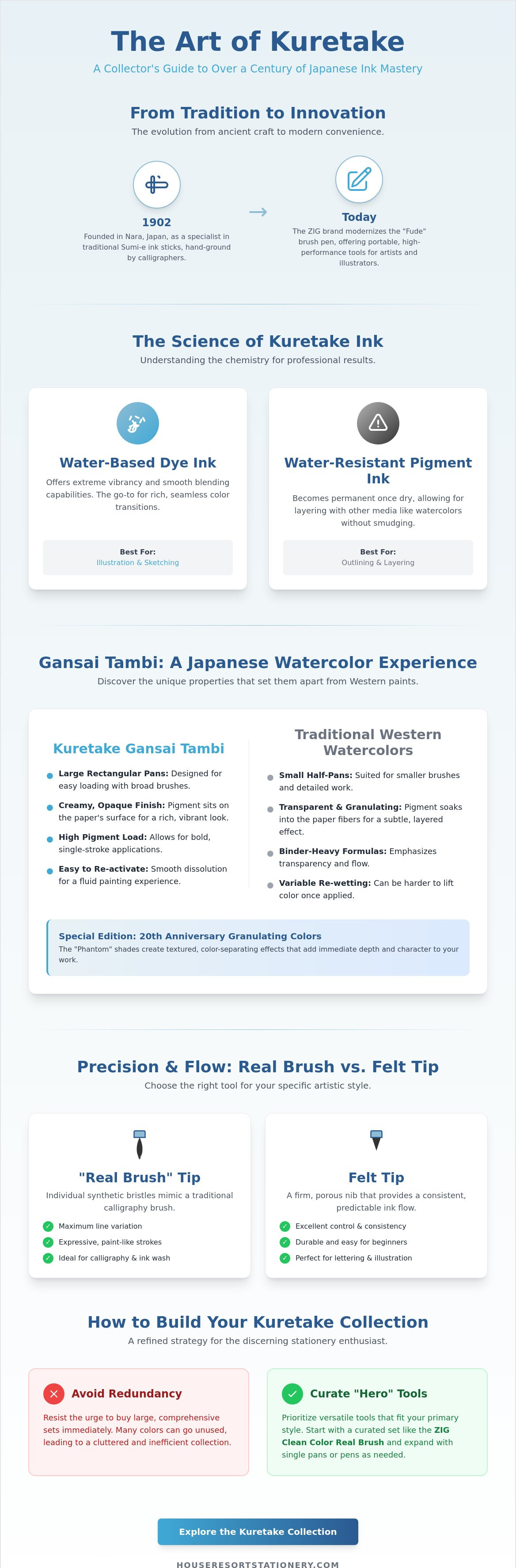
- Explore the transition from 1902 Nara craftsmanship to modern ZIG innovations, understanding how traditional ink sticks influenced today's high-performance markers.
- Learn why Gansai Tambi pan sizes and unique binders offer a distinct experience from Western watercolors, allowing for richer, more opaque applications.
- Resolve the debate between "Real Brush" and felt tips by identifying which tip material provides the specific control required for your calligraphy or illustration style.
- Develop a refined strategy for building a kuretake collection that prioritizes versatile hero tools over large, redundant sets to better complement your fine journals and notebooks.
- Discover which curated sets, such as the ZIG Clean Color Real Brush, serve as the most efficient entry points for both beginners and seasoned connoisseurs.
The Art of Kuretake: A Century of Japanese Ink Heritage
The story of Japanese artistry is incomplete without mentioning Nara, the ancient capital where ink making has been a sacred craft for centuries. Kuretake Co., Ltd. was established here in 1902. They began as a specialist in Sumi-e ink sticks, which are solid blocks of soot and glue that calligraphers grind by hand. This deep history isn't just a marketing footnote. It is the functional foundation for every modern marker and pen they produce today. The "Made in Japan" label on a kuretake product represents over a century of refining how carbon and color particles interact with paper. It signals a refusal to compromise on pigment density or archival quality.
From Sumi-e Roots to Modern Markers
Nara's heritage is steeped in the ritual of the four treasures of the study: brush, ink, paper, and inkstone. Kuretake transformed this ritual into a modern convenience during the late 20th century with the introduction of the ZIG brand. They successfully modernized the "Fude" or traditional brush pen by creating stable, portable ink delivery systems. This allowed artists to achieve the expressive, varying line weights of a brush without carrying a jar of liquid ink. This transition bridged the gap between ancient calligraphy and contemporary illustration. It proved that heritage tools can evolve without losing their soul or technical superiority.
The Science of Kuretake Pigments
Precision is a hallmark of the brand's ink chemistry. Professional artists prize kuretake products for their specific dissolution properties. This describes how smoothly a dried pigment re-activates when it meets water. This is particularly evident in their watercolors. Their product range is carefully divided to meet different technical needs:
- Water-based Dye: These offer extreme vibrancy and are perfect for blending on high-quality paper.
- Water-resistant Pigments: Once these inks dry, they become permanent, allowing you to paint over them without disturbing your original lines.
For professional results, understanding lightfastness is essential. In the context of the Gansai Tambi series, lightfastness measures a pigment's resistance to fading under prolonged exposure to light. This ensures that work created in your journals and notebooks remains as vivid as the day it was painted. The brand's philosophy remains clear. They harmonize traditional ink-making secrets with the technical demands of modern stationery enthusiasts.
Gansai Tambi: Mastering Traditional Japanese Watercolors
Gansai Tambi represents a distinct departure from the small, concentrated half-pans found in most Western watercolor kits. These professional-grade paints are formulated with a unique binder that allows the pigment to sit closer to the surface of the paper. This creates a creamy, semi-opaque finish that beautifully mirrors the Japanese style of ink wash painting. The large, rectangular pans are not just for show. They accommodate broad brushes easily, allowing you to load your tool with a single, sweeping motion. This design encourages a more fluid, expressive style of artistry that is difficult to achieve with tiny, circular wells.
The palette itself is a curated journey through Japan’s aesthetic history. Unlike Western sets that often focus on primary color theory, kuretake Gansai Tambi pans are based on colors found in nature and traditional textiles. This results in a range that feels organic and sophisticated. Recent innovations have expanded this heritage into modern textures. The April 23, 2026, release of the Granulating Colors 3 set commemorates the 20th anniversary of the line. These five "Phantom" shades create a textured, color-separating effect that adds immediate depth and character to any creative work.
Choosing Your First Gansai Tambi Set
Selecting the right set depends on your current creative focus. Beginners often find the 12 or 24-color sets provide a sufficient range without becoming overwhelming. For those seeking specific moods, the 20th Anniversary palettes offer curated selections that eliminate the guesswork of color matching. If you prefer a slow, intentional build, single pans are the best way to develop a personalized palette. This approach ensures you only own colors you truly use, keeping your collection lean and functional. If you are looking to expand your toolkit, you can explore our curated collection of artisan supplies to find your next favorite shade.
Techniques for Journaling and Illustration
Achieving a vivid look requires a light touch with water. Because Gansai is more opaque than traditional watercolors, it's easy to create rich layers without the colors turning muddy. This makes them an excellent companion for fountain pen doodle journaling. You can add a wash of color over your ink sketches to bring a page to life. The metallic sets, including the 24-color limited edition released in March 2026, are perfect for highlighting dates or borders in your planners. They provide a shimmering, high-end finish that stays bright even after the paint dries. Using these tools transforms a simple entry into a tactile, visual escape.
Precision and Flow: Choosing Kuretake Brush Pens and Markers
Choosing the right writing instrument requires an understanding of how physical materials influence your line. For many enthusiasts, the central debate lies between the "Real Brush" and the "Felt Tip." Beginners often find felt-tip markers, like the ZIG Art & Graphic Twin, offer more predictable control. The firm nib provides a consistent width, which is helpful when you're still mastering hand pressure. Conversely, a real hair brush pen demands more discipline but rewards you with unparalleled expression. Sumi-e is a form of Japanese ink painting that relies on these varying line weights, and kuretake has mastered the art of bringing that traditional feel to a portable pen body.
If you're intimidated by the flexibility of a full brush, the Fudegokochi is your ideal entry point. It features a firm yet flexible tip that mimics the look of a brush without the instability. It's a favorite for daily headers in planners. For those working in mixed media, the ZIG Mangaka fine liners provide waterproof reliability. You can sketch your outlines and apply heavy watercolor washes without worrying about the ink bleeding or smearing. This technical precision is what defines the brand's reputation among professional illustrators. The expansion of the line, including the release of the massive 100-color set 4 in August 2025, ensures that every niche of illustration is covered.
ZIG Clean Color Real Brush: The Watercolor Marker
The ZIG Clean Color Real Brush is a staple in the creative community because of its genuine bristle tip. Unlike felt markers that can fray over time, these individual synthetic bristles maintain their shape and mimic a traditional paintbrush. To get the most out of them, use a dedicated "blender" pen for smooth transitions or a water brush for a more diluted, painterly effect. Paper choice is critical here. These markers perform best on smooth, non-absorbent paper that allows the ink to sit on the surface long enough to blend. Using textured or overly porous paper will often lead to feathering and prevent the colors from moving fluidly.
For artists looking to explore markers beyond traditional paper applications, understanding how different tools perform on various surfaces is essential. You can find detailed guides on selecting the right instruments for these projects at PoscART, which helps creators navigate the best options for multi-surface work.
Specialty Calligraphy and Lettering Tools
Beyond illustration, the ZIG Memory System offers archival-quality ink that's essential for scrapbooking and long-term journaling. These pens are lightfast and acid-free, ensuring your memories don't fade. For a more tactile, personalized experience, the "Cocoiro" Letter Pen features a customizable system where you choose both the pen body and the refill. The Cocoiro was recently renewed on May 17, 2025, offering even more refined aesthetics for daily writing. These specialized tools are why kuretake remains a top recommendation for anyone exploring a Japanese stationery store. Whether you're a professional calligrapher or a casual hobbyist, these pens provide the flow and precision required for a high-end creative collection.
The Enthusiast’s Framework: How to Build Your Kuretake Collection
Building a professional art kit should feel like curating a private gallery. Many beginners make the mistake of purchasing massive, low-quality sets that offer variety but lack technical soul. A more sophisticated approach is to start with a "Hero" tool. A single kuretake No. 50 fountain brush pen, for example, offers a superior tactile experience compared to a bulk pack of generic markers. By investing in one premium instrument, you learn the nuances of hand pressure and ink flow before expanding your repertoire. This intentionality ensures every item in your collection serves a specific purpose in your creative process.
Once you've mastered your hero tool, begin building by color family. Instead of the full 100-color Gansai Tambi set, consider selecting a themed palette that complements your existing supplies. For those who enjoy a portable "Analog Escape" kit, pairing these tools with the traveler's notebook starter kit creates a modular system for on-the-go creativity. Maintenance is equally vital for longevity. High-end brush pens often feature replaceable cartridges or refills, allowing your luxury tools to last a lifetime with proper care.
Matching Inks to Your Paper
Paper choice dictates performance. kuretake pigments react differently depending on the surface coating of your stationery. Midori MD paper, known for its slight "tooth," provides excellent grip for brush pens. In contrast, the ultra-smooth Tomoe River paper allows inks to pool and dry slowly, which is ideal for showcasing the complex color separation found in granulating sets. To ensure your work stays crisp, perform a "Smudge Test" on a back page. While Mangaka liners are famously waterproof once dry, some dye-based ZIG markers may bleed if you apply a heavy watercolor wash too quickly. For added depth in your journals, try layering pilot iroshizuku bottled ink alongside your markers to create sophisticated, multi-tonal effects.
Avoiding Common Selection Mistakes
More colors don't always result in better art. A cohesive journaling style often relies on a limited, well-chosen palette rather than a chaotic rainbow. Understanding the chemistry behind your choice is also essential. Dye-based inks offer piercing vibrancy but will fade over time if exposed to direct sunlight. Pigment-based options are permanent and archival, making them the better choice for heirloom planners. Be mindful of your water usage as well. Applying excessive water to Gansai Tambi pans on standard notebook paper often leads to structural warping because the high pigment load requires less dilution than Western watercolors. To begin your journey with the right materials, view our selection of authorized Japanese stationery and select your first hero tool today.
Curated Excellence: Standout Kuretake Tools at HouseResort Stationery
Selecting the right tools is an exercise in restraint and quality. The Gansai Tambi 24-Color Set serves as the gold standard for the serious hobbyist. It provides a balanced spectrum that avoids the redundancy of larger kits while offering more depth than a basic starter set. These pans deliver the creamy, semi-opaque finish discussed earlier, allowing you to create professional-grade washes in your favorite journals and notebooks. The pigments are dense. A little goes a long way. This set is a foundational piece for any growing kuretake collection.
For those who prefer portability, the ZIG Clean Color Real Brush Set of 12 is an essential companion. These markers feature the genuine synthetic bristle tip that mimics a traditional paintbrush with surprising accuracy. They are designed for on-the-go watercoloring, fitting easily into a small pouch or planner pocket. You don't need a separate water jar to begin. Simply use the markers to lay down color and blend them with a water brush for a soft, painterly effect. It is a modern solution for the artist who values efficiency without sacrificing the tactile feedback of a real brush.
The Kuretake Fountain Brush Pen is a luxury tool specifically designed for the fountain pen connoisseur. It bridges the gap between traditional Japanese calligraphy and the convenience of a modern writing instrument. It uses standard cartridges, allowing for a steady flow of high-quality ink through a delicate, responsive brush head. This pen is ideal for adding expressive headers to your planners or creating bold, varying lines in your sketches. To add a final shimmer to your work, the Metallic Gansai Pans provide the perfect finishing touch. These pans are indispensable for decorating gift tags or adding high-end accents to your daily journaling entries.
The Boutique Choice: Why Shop With Us
HouseResort Stationery operates as an authorized retailer of fine Japanese tools. We don't believe in overwhelming our customers with thousands of generic options. Instead, we filter the market to bring you only the most reliable kuretake lines. Our "Calm Shopping" experience is designed for the enthusiast who appreciates a well-organized, fluff-free environment. When you shop with us, you are investing in authentic heritage products that have been vetted for their technical performance and aesthetic value.
Your Next Creative Step
Transforming your workspace into a sanctuary begins with a relaxing ritual. Setting aside time to explore these inks allows for a necessary analog escape. We recommend pairing your art with blackwing 602 pencils for your initial sketching. The smooth graphite provides the perfect foundation for the vibrant washes of Gansai Tambi. Once your sketch is ready, let the ink flow. You can browse the full Kuretake Collection at HouseResort Stationery to find the specific tools that will elevate your creative practice.
Elevating Your Analog Ritual
You now possess the technical framework to move beyond confusion and toward a curated gallery of high-performance tools. We've explored how Nara heritage informs the vibrant finish of Gansai Tambi and the expressive potential of ZIG markers. By selecting a "hero" tool and matching pigments to your specific paper, you ensure every entry in your journal or planner is a masterclass in precision. These choices reflect a deeper appreciation for the materials that define your creative process.
Choosing a kuretake instrument is an investment in a legacy of Japanese craftsmanship. We are an authorized retailer of fine Japanese stationery, offering a curated selection for enthusiasts that eliminates the noise of the mass market. Our boutique collection is available for national shipping across the United States, bringing a sense of calm and quality directly to your workspace. Shop the Curated Kuretake Collection and begin your next creative chapter today. Let your tools be as intentional as the art you create.
Frequently Asked Questions
Is Kuretake Gansai Tambi professional grade?
Yes, Kuretake Gansai Tambi is considered professional grade due to its high pigment concentration and excellent lightfastness. These watercolors are formulated to meet the technical standards required for traditional Japanese painting and professional illustration. The release of the 100-color set 4 in August 2025 demonstrates the brand's commitment to providing an expansive, professional-level range for serious artists.
Are Kuretake brush pens refillable?
Many premium kuretake brush pens are designed to be refillable to ensure long-term use. Models like the No. 13, No. 40, and No. 50 fountain brush pens utilize replaceable ink cartridges, which is ideal for a sustainable collection. However, some lines like the ZIG Clean Color Real Brush markers are disposable. You should always verify the specific model's specifications if you prioritize a refillable luxury tool.
What is the difference between Kuretake and ZIG?
Kuretake is the parent company, while ZIG is their sub-brand dedicated to modern markers and pens. The parent brand typically handles traditional supplies like sumi-e inks and Gansai Tambi watercolors. ZIG focuses on contemporary tools such as the Clean Color series and Mangaka fine liners. Both brands share the same 1902 Nara heritage but cater to different artistic techniques and preferences.
Can I use Kuretake Gansai Tambi with fountain pens?
You shouldn't put Gansai Tambi watercolors inside a fountain pen. These paints contain binders and heavy pigments that will clog a fountain pen's delicate feed system. The best way to use them together is to apply the watercolors as a wash over your fountain pen sketches. This adds vibrant color to your journals and notebooks without damaging your fine writing instruments.
Is Kuretake ink waterproof once it dries?
Waterproof properties depend on the specific product line you choose. The ZIG Mangaka fine liners are specifically designed to be waterproof once dry, which is perfect for outlines. Conversely, the ZIG Clean Color Real Brush markers use dye-based inks that remain water-soluble for blending. Gansai Tambi watercolors are water-resistant but can be reactivated with a wet brush if you need to adjust your work.
Which Kuretake set is best for a beginner in calligraphy?
The Fudegokochi or the ZIG Letter Pen Cocoiro are the most reliable entry points for calligraphy beginners. These pens feature firm yet flexible tips that offer more predictable control than a traditional real-hair brush. The Cocoiro line was renewed on May 17, 2025, offering a customizable body and refill system that allows you to tailor the tool to your specific hand pressure and style.
How do I store my Kuretake brush pens to prevent them from drying out?
Store your brush pens horizontally to ensure the ink remains evenly distributed to the tip. This practice is vital for dual-tip markers to prevent one end from losing its saturation. Always ensure the caps are clicked firmly into place after each use. Keeping your tools in a cool environment away from direct sunlight will also preserve the pigment quality and bristle integrity.
Why is Japanese stationery like Kuretake considered superior for artists?
Japanese stationery is prized for its technical precision and a deep connection to traditional ink-making history. Brands like kuretake utilize over a century of expertise from Nara to produce pigments with exceptional density and flow. This results in a more reliable performance on premium paper compared to mass-market alternatives. It's this unique combination of heritage craftsmanship and modern innovation that attracts the dedicated connoisseur.