
How to Organize a Fountain Pen Ink Collection: The Connoisseur’s Guide for 2026
What if your ink collection felt less like a cluttered drawer and more like a curated gallery of creative potential? For many enthusiasts, the joy of a new bottle is often dampened by the reality of a messy stash. Learning how to organize a fountain pen ink collection is the essential bridge between simply owning supplies and mastering a true archive. You likely know the frustration of purchasing a striking new shade of sapphire only to discover a nearly identical bottle hidden at the back of a shelf. It's a common pain point for the modern connoisseur, but it's one that a systematic approach can easily solve.
We agree that your inks deserve better than to fade in the sun or dry out from neglect. This guide promises to transform your storage habits with professional systems for swatching, cataloging, and preservation. We will preview the best digital tools for 2026, including the Penpal app for searchable inventories, and discuss how to use premium paper from makers like Midori to create a stunning physical record. By the end, you'll have a streamlined system that ensures your favorite colors are always at your fingertips and perfectly paired with the right pen.
Key Takeaways
- Protect the longevity of your collection by shielding bottles from the primary enemies of ink: UV light, extreme temperatures, and evaporation.
- Learn how to organize a fountain pen ink collection using a hybrid system that pairs a searchable digital inventory with a tactile physical archive.
- Achieve precise color representation by swatching on specialized Japanese paper surfaces, essential for capturing the true sheen and shading of premium inks.
- Streamline your curation process by tracking purchase dates and bottle status, effectively eliminating the financial waste of buying redundant colors.
- Transform your daily writing into a sophisticated ritual by rotating seasonal ink palettes that complement your journals and creative themes.
The Philosophy of Ink Curation: Why Organization Matters
Curation is a ritual. It transforms a scattered desk into a personal sanctuary. When you learn how to organize a fountain pen ink collection, you aren't just tidying; you're building a living reference for your creative life. This 'Ink Archive' becomes a library of moods and textures. It serves as a safeguard against the 'duplicate color' syndrome often found at bustling pen shows. We've all been there. You purchase a vibrant teal only to realize you already have three identical bottles at home. Proper organization saves money. It saves space. You don't want a crowded desk to stifle your next great idea.
A structured collection inspires the writing process. It resurfaces forgotten shades that have gathered dust in the back of a cabinet. Understanding the history and composition of fountain pen ink helps you appreciate why certain pigments behave differently on paper. A well-ordered archive functions like a private stationery boutique. It makes every refill feel like an intentional choice. This organization even fuels creative habits like fountain pen doodle journaling, where matching the right ink to your mood is part of the art.
Assessing Your Current Collection
Begin by auditing your inventory. Separate your 2ml or 5ml samples from full 50ml bottles. This distinction is vital for storage depth and accessibility. Identify your 'core' colors. These are the reliable blues and blacks used for daily correspondence. Contrast these with your experimental shimmer or high-sheen inks. Specialty bottles require more frequent agitation and specific pen pairings. Set a clear goal for your archive. Decide if you want a functional, daily-use setup or a historical gallery of limited editions.
The 'Manufacturer-First' Approach
Many collectors find that organizing by brand is the most intuitive method. This strategy respects the heritage of makers like Pilot Iroshizuku or Sailor. Bottle shapes often dictate your physical storage limits. For example, the elegant, wide bottles of Iroshizuku require different shelf spacing than tall, slender bottles from other manufacturers. Grouping by maker creates visual harmony. It highlights the prestige of heritage brands. It simplifies the search when you're in the mood for a specific ink flow. This meticulous approach turns a hobby into a sophisticated curation, much like the refined selection found at HouseResort Stationery.
Physical Storage Solutions: Preservation and Display
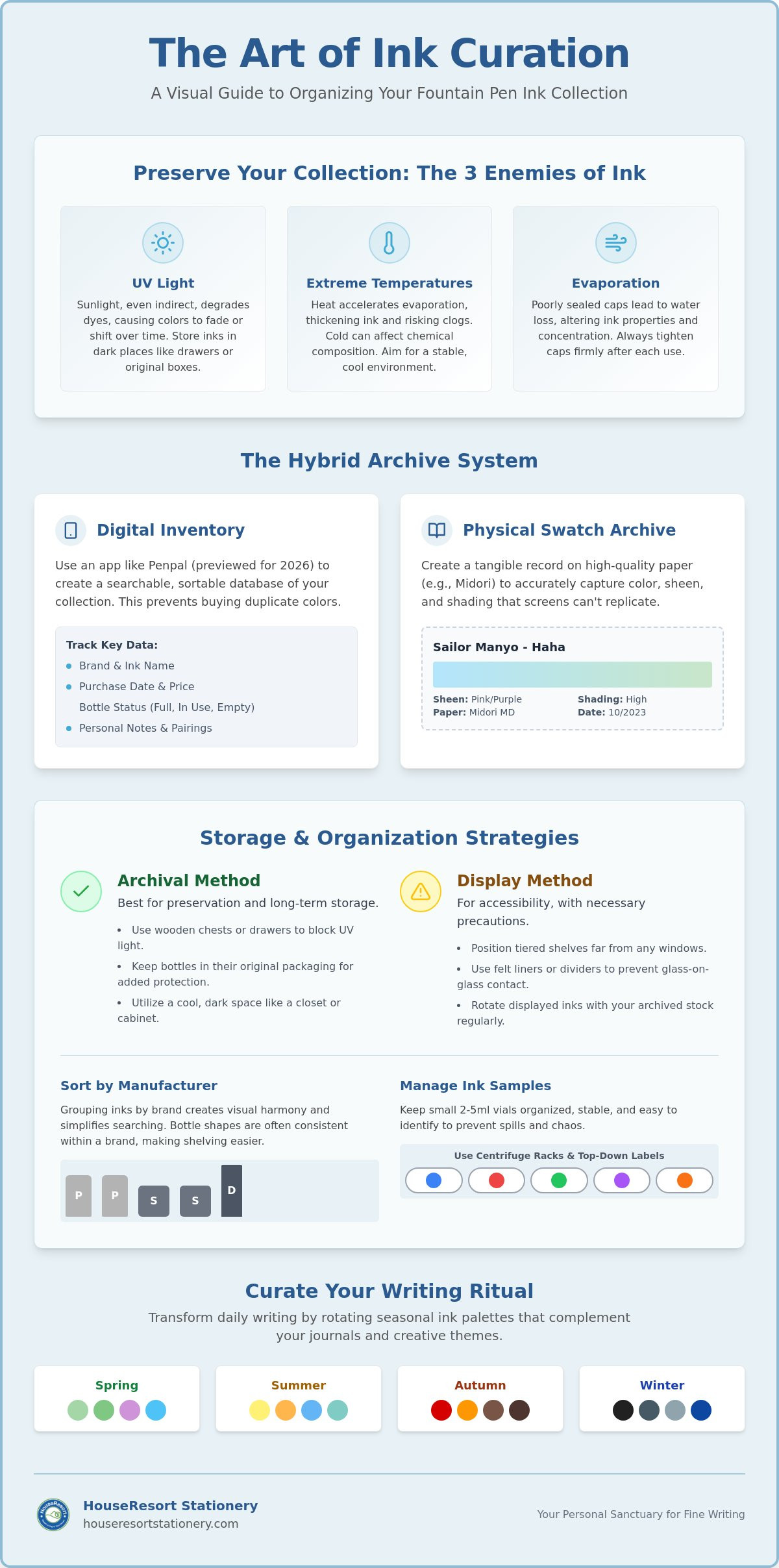
The three enemies of ink are UV light, extreme temperature, and evaporation. Each one can quietly degrade the chemical balance of a precious bottle. When you determine how to organize a fountain pen ink collection, preservation must always precede presentation. High-quality dyes are sensitive. Research regarding the lightfastness of inks confirms that even indirect sunlight can cause colors to shift or fade over time. Archival storage in a cool, dark environment remains the gold standard for collection longevity.
Temperature fluctuations are equally damaging. Extreme heat accelerates evaporation, which thickens the fluid and may lead to nib clogging. Ensure every cap is tightened firmly but never forced. Safety protocols also involve managing glass-on-glass contact. Avoid stacking bottles directly on top of one another without the original packaging. Small vibrations or accidental bumps can lead to micro-fractures in the glass. A well-organized shelf uses felt lining or dedicated dividers to keep each maker's work secure and pristine.
Archival Storage vs. Desktop Displays
Collectors often choose between hidden chests and tiered shelving. A wooden chest with brass accents offers a sophisticated boutique feel while shielding contents from light. Keeping bottles in their original boxes is a professional secret. This practice provides a uniform appearance on the shelf and adds a secondary layer of UV protection. If you prefer a visible desktop display, place it far from windows. You might consider browsing a curated selection of desk accessories to keep your most-used bottles within reach while maintaining a clean aesthetic.
Managing Ink Samples
Samples are the experimental heart of a collection. These 2ml vials can quickly become a chaotic mess if left loose. Use centrifuge racks for stability. These grids keep vials upright and prevent accidental leaks during a refill session. Label the top of every cap for top-down visibility. This strategy is essential when storing samples in shallow desk drawers. Implement a 'First-In, First-Out' (FIFO) method for your samples. This ensures you enjoy older acquisitions before they have a chance to settle, keeping your writing experience vibrant and consistent.
The Art of Swatching: Creating a Physical Reference
Digital photos often fail to capture the soul of a premium ink. Screens distort saturation, and sensors struggle with the subtle shifts of complex pigments. This is why a physical reference is the cornerstone of how to organize a fountain pen ink collection. A swatch provides an unfiltered view of how a specific ink behaves on your preferred writing surface. It reveals the true undertones that a camera lens might miss. By creating a tangible archive, you ensure that your color choices are always based on reality rather than a digital approximation.
Consistency is key to a professional archive. Standardizing your swatch format allows for easy side-by-side comparisons. Use a glass dip pen to record the ink name; this ensures a clean, neutral representation of the color without the influence of a specific fountain pen's feed. For broader coverage, a cotton swab or an automatic pen creates "ink splats" that show the full depth of the pigment. These tools help you visualize how the ink will look in both a fine nib and a broad, wet writer.
The choice of paper is not a minor detail. Using ink-resistant Japanese paper is essential for accuracy. High-quality surfaces prevent feathering and show the ink's properties as the manufacturer intended. Without the right paper, even the most expensive inks can look flat and uninspired. This step is a vital part of the curation process for any serious collector.
Swatch Cards vs. Ink Journals
Individual swatch cards, such as the popular Col-o-ring system, offer unparalleled flexibility. You can rearrange them by color family or brand, making it simple to find the perfect match for a new pen. Conversely, a dedicated Midori MD Notebook Journal provides a beautiful narrative of your journey. Journals allow you to see your collection grow chronologically. While cards are better for comparison, a journal acts as a historical record of your tastes and acquisitions over time.
Capturing the 'Personality' of the Ink
A great swatch does more than show color; it captures personality. Use a heavy application in one corner to encourage pooling. This technique highlights shading and shimmer. Sheen is the metallic-like surface reflection seen on high-quality paper. To truly master how to organize a fountain pen ink collection, you should also record technical data on each swatch. Include the following points for a complete reference:
- Brand and specific color name
- Approximate dry time on your primary paper
- Water resistance levels (using a water drop test)
- The date the swatch was created
Recording these details prevents future frustration. It helps you avoid pairing a slow-drying ink with a journal you need to close quickly. This meticulous approach ensures your collection remains a functional tool for your daily writing ritual.
Digital and Paper-Based Inventory Systems
Mastering how to organize a fountain pen ink collection requires a sophisticated hybrid strategy. While physical swatches capture the soul of the pigment, a digital log provides the searchable intelligence needed for a growing archive. This dual system ensures you can verify your inventory from a mobile device while browsing a boutique. It prevents the common error of purchasing a duplicate shade. Your inventory should track specific data points: manufacturer, color name, purchase date, and whether the entry is a full bottle or a 2ml sample. Tracking the "status" of a bottle helps you identify which favorites are running low before you sit down for a long writing session.
The ritual of documentation is as important as the writing itself. A well-maintained log becomes a personal encyclopedia of your tastes. Digital tools allow for instant filtering by properties like shimmer, sheen, or water resistance. Meanwhile, a paper-based log offers a tactile connection to your materials. This combination respects the heritage of analog tools while embracing the efficiency of modern cataloging. It turns a simple hobby into a meticulous curation of creative resources.
Digital Tracking Tools
Fountain Pen Companion remains the industry standard for web-based logs. It allows users to compare their stashes with a global community. For those seeking more privacy, a custom Notion database or Google Sheet offers total control. As of May 2026, the Penpal app provides a specialized mobile experience. The "Enthusiast" plan is free for up to 20 inks, while the "Collector" plan offers unlimited tracking for $1.99 per month. When photographing your inks for these apps, use consistent, natural light. This ensures your digital catalog remains a faithful representation of your physical swatches.
The 'Currently Inked' Log
The "Currently Inked" log is a vital subset of your inventory. It tracks which pen is paired with which ink at any given moment. This practice prevents you from forgetting a high-maintenance pigment in a delicate vintage pen. Many connoisseurs use a Traveler's Notebook to maintain this record. Its modular nature allows you to dedicated a specific insert to ink performance over time. You can note how a specific Sailor ink flows in a broad nib versus a fine one. This long-term study refines your understanding of your collection's unique personality.
Ready to begin your next chapter of curation? Explore our curated selection of journals and planners to find the perfect foundation for your ink archive.
Curating Your Daily Writing Ritual
The final step in how to organize a fountain pen ink collection is integrating your archive into your daily life. Organization shouldn't be a static chore. It is a dynamic part of your writing ritual. Implementing a seasonal rotation keeps your collection fresh and inspiring. You might choose delicate pastels for Spring, vibrant teals for Summer, rich ochres for Autumn, and deep, shimmering burgundies for Winter. This rotation ensures every bottle in your archive gets its moment on the page and prevents your favorites from being overlooked.
Matching your ink palette to the theme of your fountain pen doodle journaling adds another layer of intentionality. If you're sketching botanical scenes, surfacing your greens and earth tones from the archive becomes a joyous part of the creative process. To keep your collection manageable, consider the 'One In, One Out' rule. For every new bottle added to your permanent shelf, one must be finished or gifted. This prevents your curated boutique from becoming a cluttered warehouse. Hosting a 'swatch party' or an ink sample swap is an excellent way to share the wealth and discover new heritage makers without committing to full bottles.
A sophisticated approach to how to organize a fountain pen ink collection also involves community engagement. Swapping samples with fellow enthusiasts allows you to test exotic pigments before investing in a full 50ml bottle. It turns a solitary hobby into a shared passion for quality materials. This social aspect of curation keeps the hobby vibrant and introduces you to manufacturers you might otherwise miss.
Selecting a Signature Palette
A sophisticated collection balances 'workhorse' inks with 'creative' ones. Workhorse inks are reliable, professional, and often water-resistant. Many connoisseurs rely on Pilot Iroshizuku bottled ink for this role due to its exceptional flow and elegant bottle design. Creative inks are the playground of your collection, featuring heavy sheen or shimmer. Curating by color family allows you to build a spectrum of blues or greens, helping you find the exact shade that matches your current mood.
Maintaining the Archive
Preservation is an ongoing commitment. Conduct a 6-month ink audit to check for sediment or excessive evaporation. If a bottle has thickened, a tiny drop of distilled water can often restore its original properties. Cleaning protocols are equally critical. When switching between high-pigment or shimmering inks, use a dedicated pen flush to prevent cross-contamination. This meticulous care ensures your expensive bottled inks remain performant for years. EXPLORE our curated collection of fine writing instruments to find your next ink partner and continue your journey into the art of analog expression.
Refining Your Analog Archive for 2026
Mastering how to organize a fountain pen ink collection transforms your workspace from a simple storage area into a professional gallery of creative potential. By prioritizing archival preservation against UV light and implementing a hybrid inventory system, you protect both your financial investment and your artistic flow. A well-ordered archive ensures that every bottle is used, appreciated, and never forgotten in the back of a drawer. This systematic approach allows you to spend less time searching for the right shade and more time enjoying the tactile pleasure of writing.
As an authorized retailer of premium stationery brands, HouseResort Stationery provides the foundational tools needed for this level of meticulous curation. Our expertly curated selection for enthusiasts features high-end writing instruments and specialized paper surfaces designed to showcase the true personality of your inks. With nationwide shipping on all writing tools, we make it easy to maintain a world-class collection from the comfort of your home.
Ready to elevate your daily writing ritual? BROWSE our curated collection of fine fountain pens and ink-friendly paper to find the perfect companions for your growing archive. Your next great creative discovery is just a page away.
Frequently Asked Questions
How do I prevent my fountain pen ink from fading in storage?
Store your inks in a cool, dark place to prevent UV-induced fading. Light exposure is the most significant factor in pigment degradation and color shifting. Keeping bottles in their original boxes or inside an opaque cabinet ensures the chemical composition remains stable for years. This simple habit preserves the vibrancy of your most expensive bottled inks.
What is the best paper for swatching fountain pen inks in 2026?
High-quality Japanese paper like Midori MD or Traveler's Notebook inserts remains the best choice for swatching. These surfaces are specifically engineered to resist feathering and bleeding. They allow the ink's true shading and sheen to manifest without being absorbed too quickly by the fibers. Using professional-grade paper is essential for an accurate physical reference.
Should I keep the original boxes for my ink bottles?
Yes, you should keep the original boxes whenever possible. They provide a standardized shape for stacking and offer an extra layer of protection against light exposure. Boxes also protect the glass from accidental chips or micro-fractures during movement. Maintaining the packaging even helps preserve the resale value for rare or limited-edition bottles.
How long does a bottle of fountain pen ink typically last?
A well-stored bottle of ink can last for several decades. Most inks don't have a strict expiration date if the cap is sealed tightly and the fluid remains free of biological growth. You should check for sediment or "Slime in the Bottle" every few years. If the ink smells unusual or looks stringy, it's time to dispose of it safely.
What is the difference between a swatch card and an ink journal?
Swatch cards offer modular flexibility, while journals provide a chronological narrative of your hobby. Cards allow you to physically move colors side-by-side for comparison. A journal, like a Midori MD notebook, creates a permanent record that tracks your evolving tastes. It's also a great place to record how specific inks perform in different pens over time.
Can I organize my inks by color or should I stick to brand names?
A hybrid approach is the most effective way to learn how to organize a fountain pen ink collection. Store your physical bottles by manufacturer to accommodate specific bottle heights and shapes. Simultaneously, maintain a swatch archive organized by color family. This method allows you to find a specific shade quickly while keeping your storage shelves visually harmonious and stable.
Is there an app for tracking fountain pen ink collections?
Digital tools like the Penpal app and Fountain Pen Companion provide the best searchable inventory for enthusiasts. These platforms help you track your collection by brand, color family, and even purchase date. Using an app is a crucial part of knowing how to organize a fountain pen ink collection because it prevents you from buying redundant shades during pen shows.
How do I organize ink samples versus full bottles?
Use centrifuge racks for 2ml samples and dedicated shelving for full bottles. Vials are prone to tipping and leaking, so they require upright, grid-based storage for safety. Labeling the caps of your samples ensures you can identify colors quickly when looking down into a drawer. This separation keeps your primary archive clean while allowing easy access to experimental shades.