
Lamy Safari Fountain Pen: The Ultimate 2026 Buying Guide for Enthusiasts
The Lamy Safari isn't just a starter pen; it's a modular design icon that evolves with your handwriting. You've likely admired its distinctive clip or felt tempted by the vibrant 2026 Special Edition colors, yet it's natural to hesitate. Confusion over proprietary cartridges or the fear of choosing the wrong nib size can make your first step into fine stationery feel daunting. You want a tool that feels natural in your hand, not a source of frustration.
We believe that a pen should be a reliable daily driver and a reflection of your unique personality. This guide will help you master the lamy safari, ensuring you choose the perfect configuration to transform your note-taking into a tactile pleasure. You'll discover how the new semi-transparent grip enhances the 2026 models and learn the technical markers that separate a genuine heritage piece from a clever imitation. We'll preview the best nib sizes for your style, the benefits of the Z28 converter, and how to maintain your pen for a lifetime of use.
Key Takeaways
- Trace the functionalist Bauhaus roots of the Safari and see why its 1980 design remains a global staple for modern collectors.
- Evaluate technical specifications like the 17g body weight to ensure comfort during extended note-taking or professional meetings.
- Master the configuration process by pairing your unique handwriting size with the correct interchangeable lamy safari nib.
- Follow a curated checklist for verifying authenticity and performing the first cleaning of your new writing tool.
- Learn why selecting the right journal or notebook is 50% of the experience and how to pair your pen with premium stationery.
The Lamy Safari: A Bauhaus Icon for the Modern Desk
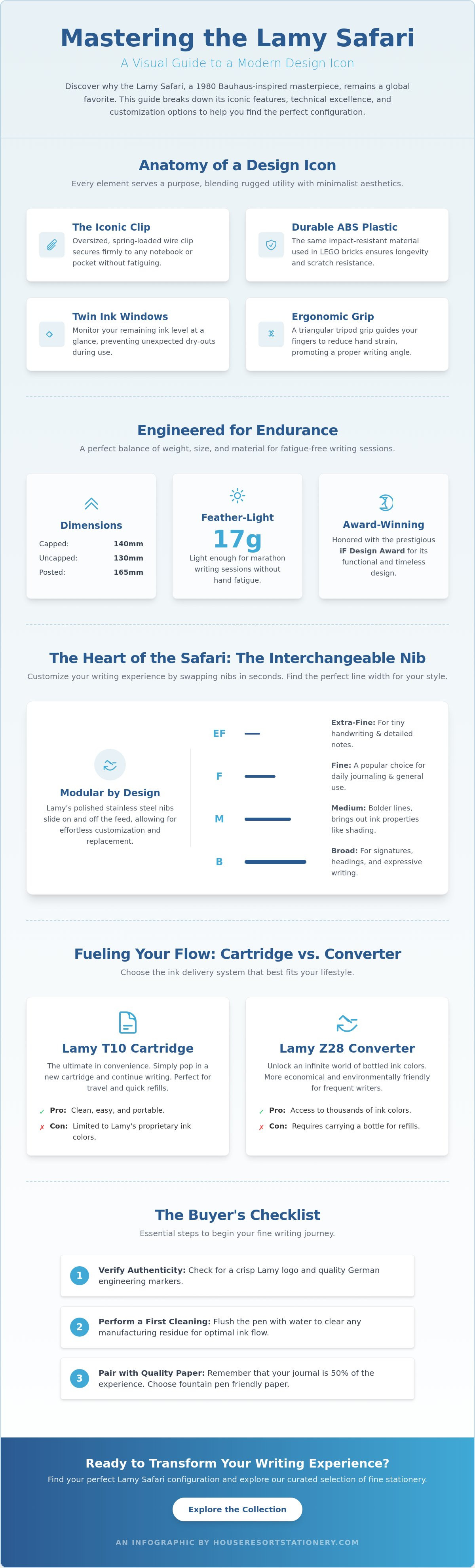
Design enthusiasts recognize the lamy safari as a masterclass in functionalism. Rooted in the Bauhaus principle that form must follow function, this pen stripped away the unnecessary ornamentation of the mid-20th century. When it debuted in 1980 at the Frankfurt Book Fair, it challenged the idea that a quality writing tool had to be a delicate, luxury item made of precious metals. Instead, designer Wolfgang Fabian presented a rugged, industrial object intended for students, yet its clean lines and avant-garde aesthetic quickly captured the attention of architects and creatives worldwide.
The secret to its longevity lies in its uncompromising durability. Lamy constructs each barrel and cap from Acrylonitrile Butadiene Styrene, or ABS plastic. This is the same impact-resistant material used to manufacture LEGO bricks. It doesn't just resist scratches; it survives the rigors of daily carry in a way that lacquered pens cannot. To understand the heritage behind this engineering, a look at the Lamy company history reveals a consistent dedication to German manufacturing standards that persists in their Heidelberg factory today. This reliability is why the Safari is often called the gateway pen. It introduces writers to the joy of liquid ink, yet many collectors find themselves returning to it even after acquiring pens that cost ten times as much.
Why the Safari Design is Timeless
Every element of the Safari serves a specific purpose. The oversized chrome wire clip is perhaps its most recognizable feature. It's designed to be spring-loaded and incredibly strong, allowing you to secure the pen to a thick notebook cover or a denim pocket without the metal fatiguing over time. Another revolutionary addition was the twin ink windows. These small cutouts in the barrel allow you to monitor your remaining ink level at a glance, preventing the frustration of a dry nib during a critical meeting. Tactile preference also plays a role in the Safari's appeal. The glossy finishes offer a classic, polished feel, while the matte versions provide a textured, "grippy" surface that feels modern and understated.
The Controversial Triangular Grip
The most discussed aspect of the lamy safari is undoubtedly its ergonomic tripod grip. Two deep, symmetrical indentations force the thumb and index finger into a specific position. For beginners, this is a helpful guide that encourages a proper writing angle, reducing hand strain during long sessions. However, for those who use a "quadrupod" grip or side-writers who rotate their pens, this feature can feel restrictive. If you find the grip challenging, try loosening your pressure. Because the pen uses a free-flowing feed, you don't need to press down to leave a mark. Letting the pen rest lightly in the "V" of your hand allows the triangular facets to align naturally with your fingers, maximizing comfort for hours of uninterrupted journaling.
Technical Specifications and Material Excellence
The lamy safari is a study in precision and industrial balance. It measures 140mm when capped, 130mm uncapped, and extends to a generous 165mm when the cap is posted on the back of the barrel. At a total weight of just 17 grams, it's engineered for endurance. This lightweight profile isn't a sign of fragility; it's a deliberate choice to prevent hand fatigue. Whether you're navigating a three-hour university exam or a marathon brainstorming session, the pen remains comfortable in the hand. It's this commitment to user-centric engineering that earned the collection the prestigious iF Design Award, cementing its status as a functional masterpiece.
Durability remains the Safari's hallmark. The ABS plastic body is designed to survive the chaos of a crowded bag or a constant daily commute. Unlike metal pens that might dent or lacquered finishes that chip, the Safari's color is consistent throughout the material. This means a deep scratch won't reveal a different color underneath. This resilience is paired with a vibrant color philosophy. Each year, enthusiasts anticipate the release of limited special editions. The 2026 Neon Pink and Neon Yellow models even introduce a new design element for the line: a semi-transparent grip section. These annual releases transform a functional tool into a collectible accessory that reflects your personal style.
The Interchangeable Nib System
One of the most compelling reasons to choose the lamy safari is its modularity. You can swap nibs in seconds by simply sliding the old one off the feed and clicking a new one into place. This allows you to transition from a precise Extra-Fine (EF) for margin notes to a 1.9mm calligraphy nib for creative projects. Lamy nibs are made of polished stainless steel for consistent ink flow. If you're looking to expand your collection or try a different line width, you can browse our curated selection of fine writing tools to find your next favorite nib grade.
Ink Systems: Cartridges vs. Converters
Flexibility extends to how you fill your pen. The Safari uses the proprietary Lamy T10 cartridge, which holds a significant volume of ink and is perfect for travel. However, most enthusiasts eventually graduate to the Lamy Z28 converter. This piston-style attachment allows you to draw ink directly from a bottle, opening up a world of thousands of colors and specialized properties. Be aware that standard international converters will not fit; the Safari requires Lamy's specific proprietary design to ensure a leak-proof seal and steady performance.
Choosing Your Perfect Configuration
Selecting the right lamy safari requires more than just picking a favorite color. It's about tailoring the pen's modular components to your specific environment. While the Safari's ABS plastic is the gold standard for durability, you might consider the Lamy AL-Star if you prefer a cooler, metallic feel and a slightly broader grip section. The AL-Star is crafted from lightweight aluminum, offering a more "executive" weight without sacrificing the ergonomic benefits of the Safari line. For those fascinated by the internal mechanics of the feed and converter, the Lamy Vista offers a completely transparent "demonstrator" body. Choosing your finish is a matter of personal branding. A matte Umbra finish projects professional restraint in a boardroom, whereas the 2026 Neon special editions act as vibrant, high-energy conversation starters.
The beauty of the Lamy system is that you aren't locked into one writing style. Because the nibs are interchangeable, you can start with a standard Fine and later explore the artistic possibilities of a 1.5mm stub nib. This modularity makes the Safari a versatile tool that grows with your skills. Whether you're a student taking rapid-fire notes or a professional signing documents, there is a specific setup designed to optimize your experience. For a deeper dive into these technical differences, consult our comprehensive guide on Fountain Pen Nib Sizes Explained: The Ultimate Guide to Finding Your Signature Line.
Nib Size Comparison for Daily Use
- Extra-Fine (EF) and Fine (F): These are the workhorses of the collection. They're best for small handwriting and perform well on standard, absorbent office paper where broader nibs might bleed or feather.
- Medium (M) and Broad (B): These nibs lay down more ink, which is perfect for unleashing the shading and sheen properties of premium bottled inks. They're ideal for bold signatures or expressive journaling.
- Left-Handed (LH): Lamy is one of the few brands to offer a dedicated LH nib. It features a slight oblique cut that accommodates the "push" stroke of left-handed writers, helping to prevent smudging and skipping.
Lamy Safari vs. Kaweco Classic Sport
Comparing the lamy safari to the Kaweco Classic Sport highlights two different philosophies of portability. The Safari is a full-sized workhorse. It's long enough to use comfortably without posting the cap, making it ideal for long desk sessions. The Kaweco, however, is a true pocket pen that only becomes full-sized when the cap is posted on the back. While the Kaweco is unmatched for portability, the Safari's ergonomic grip often makes it the superior choice for beginners who need to learn proper finger placement. You can read more about this compact alternative in our Kaweco Classic Sport: The Definitive Guide to the Iconic Pocket Fountain Pen.
The Buyer's Checklist: Authenticity and Maintenance
The global popularity of the lamy safari has unfortunately made it a frequent target for counterfeiters on unregulated marketplaces. Ensuring you receive a genuine product is the first step toward a lifetime of reliable writing. While a fake might look similar in a low-resolution photo, it lacks the precision engineering and material quality of the German original. Purchasing from an authorized retailer is the only way to guarantee access to manufacturer support and authentic replacement parts. If you're ready to start your collection with confidence, shop our verified selection of genuine Lamy writing instruments today.
New owners often encounter minor quirks that can be mistaken for defects. For example, you might notice a small amount of ink resting on the top of the metal surface. This is known as nib creeping, and it is a normal occurrence for Safari users that doesn't affect performance or indicate a leak. If the pen feels "scratchy" during your first session, check the alignment of the tines or ensure you're using fountain pen friendly paper. Most flow issues are easily resolved with a simple cleaning, which removes any factory residue left behind during the manufacturing process.
How to Spot a Counterfeit Lamy Safari
Identifying a genuine pen requires a meticulous eye for detail. Counterfeiters often miss the subtle functional markers that Lamy includes for shipping and quality control. Use this checklist to verify your purchase:
- The Cardboard Spacer: Genuine pens ship with a small cardboard ring between the barrel and the section. This prevents the cartridge from being punctured during transit. Fakes often omit this or use a plastic substitute.
- Blue Ink Residue: Lamy tests every single pen at the factory with blue ink. Finding a trace of blue on the feed of a "new" pen is actually a sign of authenticity.
- The Cap and Logo: Inspect the top of the cap for a crisp, cross-shaped indentation. The "LAMY" logo on the barrel should be deeply engraved and perfectly centered, not just printed on the surface.
- The Nib Swap: A real lamy safari nib slides off the feed with a specific, firm resistance. If the nib is loose or requires extreme force to move, it's likely a counterfeit.
Long-Term Care and Cleaning
Maintaining your pen is a straightforward process that ensures consistent ink flow. To clean your Safari for the first time or when changing colors, flush the nib and feed with room-temperature water. A bulb syringe is a Safari owner's best friend; it allows you to push water through the feed with more pressure than a converter alone. While the Safari is a rugged tool, it shouldn't sit unused with ink inside for more than two weeks. If the ink dries out and clogs the feed, a longer soak in distilled water may be necessary. Periodically check the small rubber O-ring located where the section meets the barrel. This ring maintains the airtight seal that prevents your ink from evaporating, ensuring the pen starts instantly every time it touches the paper.
The Ultimate Writing System: Pairing Your Safari
Owning a lamy safari is only the first step in crafting a superior writing experience. Paper quality represents roughly 50% of the fountain pen experience. While the pen provides the delivery mechanism, the paper determines how that ink interacts with the surface, affecting everything from drying time to the vibrancy of the color. To truly appreciate the capabilities of your pen, explore our Japanese stationery online store guide. These specialized tools are designed to handle liquid ink without the feathering or bleed-through common in standard office supplies.
The Safari's feed is a marvel of reliability, designed to handle a wide range of ink viscosities. For a sophisticated writing session, we recommend pairing the pen with Pilot Iroshizuku bottled ink. These inks are celebrated for their lubricated flow and rich, nature-inspired hues. They ensure that even an Extra-Fine nib glides across the page with minimal resistance, showcasing the precision of Lamy's German engineering.
Best Paper for Lamy Inks
For those who value portability, Traveler's Notebook inserts are an ideal choice. Their paper is thin yet remarkably resilient, making it The Traveler's Notebook Starter Kit: A Comprehensive Guide to Modular Journaling companion for a Safari on the go. If you prefer a desk-bound experience, consider Midori MD paper. It offers a slight "tooth" that provides tactile feedback, whereas Rhodia paper is coated for a glass-like smoothness. Midori tends to show off the shading properties of inks better, while Rhodia is excellent for fast-drying notes in a professional setting.
Curating Your 2026 Collection
We suggest adopting a "One Pen, Five Nibs" strategy to maximize your investment. Instead of buying multiple pens, utilize the modular system we discussed earlier to swap between nib sizes for different tasks. A broad nib is perfect for fountain pen doodle journaling for beginners, allowing for creative expression and ink play. For daily administrative work, simply switch back to a Fine or Extra-Fine point. This versatility is why the Safari remains a staple in the enthusiast community.
Choosing the lamy safari as your primary writing tool is a commitment to quality and tradition. For your first 2026 setup, our final recommendation is to start with a Fine nib and a Z28 converter. This combination offers the perfect balance of utility and the freedom to explore the vast world of bottled inks. It's a reliable foundation for a curated analog lifestyle that values the tactile nature of every word written.
Elevate Your Everyday Writing
The journey into fine stationery often begins with a single, thoughtful choice. By understanding the Bauhaus roots and modular versatility of the lamy safari, you've transformed a simple purchase into a curated tool for self-expression. You now possess the knowledge to navigate the technical nuances of nib selection and the vital importance of verifying authenticity to protect your investment. Whether you are pairing your pen with premium Japanese paper or experimenting with vibrant bottled inks, this pen remains the most reliable foundation for your analog habits.
As an Authorized Lamy Retailer, we invite you to shop our curated collection of authentic Lamy Safari fountain pens and accessories. Our boutique selection includes the highly anticipated 2026 Special Editions and we provide expert support for nib swapping to ensure your pen perfectly matches your signature. Each tool we offer is selected for its craftsmanship and functional value, ensuring your shopping experience is as rewarding as the writing itself. Start your next chapter with a tool that values tradition as much as you do.
Frequently Asked Questions
Is the Lamy Safari good for beginners?
Yes, the Safari is widely considered the gold standard for newcomers due to its ergonomic grip and nearly indestructible build. The tripod section naturally guides your finger placement, which helps those transitioning from ballpoints to maintain a proper writing angle. Its modular design allows beginners to experiment with various nib sizes without the expense of purchasing an entirely new pen.
What is the difference between the Lamy Safari and the Lamy AL-Star?
The primary difference lies in the body material and the diameter of the grip section. While the Safari uses rugged ABS plastic, the AL-Star features a lightweight aluminum body that feels cooler to the touch and offers a more executive aesthetic. The AL-Star also has a slightly larger, smoky transparent grip section, which some writers find more comfortable for larger hands.
Do Lamy pens come with an ink converter?
No, the lamy safari typically ships with one blue T10 ink cartridge but does not include a converter in the box. To use bottled ink, you must purchase the Z28 piston converter separately. This accessory is essential for enthusiasts who want to explore a broader spectrum of specialized ink colors beyond the standard factory cartridge range.
Why is my Lamy Safari nib scratchy?
A scratchy sensation usually indicates misaligned tines or the use of low-quality, fibrous paper. Check the nib under magnification to see if one side is sitting higher than the other. Sometimes, microscopic factory residue can also affect the smoothness. A quick flush with room-temperature water often resolves the issue and restores the consistent, fluid glide the pen is known for.
Can I use other brands of ink cartridges in my Lamy Safari?
No, this pen requires proprietary Lamy T10 cartridges because of its specific internal barrel design. Standard international cartridges will not fit or seal properly, which can lead to messy leaks or ink flow failures. If you want to use ink from other manufacturers, the most reliable solution is to use a Z28 converter and fill it with your bottled ink of choice.
How often should I clean my Lamy Safari fountain pen?
You should clean your pen every four to six weeks or whenever you decide to change ink colors. Regular maintenance prevents dried ink from clogging the feed and ensures consistent performance over time. If you prefer using permanent or high-sheen inks, more frequent flushing is recommended to maintain the integrity of the capillary system and prevent hard starts.
Is the Lamy Safari suitable for left-handed writers?
Yes, especially since the lamy safari is one of the few pens that offers a specialized Left-Handed (LH) nib. The LH nib features a slight oblique cut that accommodates the unique "push" stroke common among lefties. This design helps reduce skipping and provides a much smoother experience compared to using a standard symmetrical nib that might catch on the paper.
What is the best ink for a Lamy Safari?
The Safari performs exceptionally well with Lamy's own bottled inks, but it is also highly compatible with premium lubricated options like Pilot Iroshizuku. These high-quality inks ensure a wet, consistent flow that complements the polished stainless steel nib. For the best results, always choose inks specifically formulated for fountain pens to avoid damaging the feed or causing unnecessary clogs.