
The Brass Pencil Case: A Guide to Timeless Stationery Storage in 2026
The most sustainable tool in your collection isn't the one made from recycled plastic; it's the one you'll never have to replace. You've likely felt the frustration of generic office supplies. They feel soul-less and disposable. Cheap plastic cases crack under pressure, and finding a high-quality brass pencil case is often the only way to truly protect the delicate finishes of your favorite fountain pens. It's a common struggle for those who value the tactile nature of analog tools but find themselves stuck with storage that doesn't match the quality of their instruments.
Choosing a solid brass storage solution transforms your stationery from a simple utility into a living heirloom that records your journey. You'll discover why this heavy, durable material is the ultimate lifelong companion for your finest writing instruments and how its character deepens over time. We'll explore the science behind the patina process, the rising "Buy It For Life" trend of 2026, and how to find a curated case that fits your specific pen sizes perfectly.
Key Takeaways
- Identify why solid metal construction offers superior protection for fine pen finishes compared to generic fabric or plastic cases.
- Understand the oxidation process that allows a brass pencil case to transition from bright gold to a deep, personalized bronze patina.
- Evaluate internal dimensions and storage depth to ensure your specific writing instruments remain secure and scratch-free.
- Learn to balance routine cleaning with intentional aging to maintain the material's structural integrity and aesthetic charm.
- Discover the functional synergy of pairing heritage brass tools with premium journals and fountain pen-friendly paper.
What is a Brass Pencil Case and Why Does It Matter?
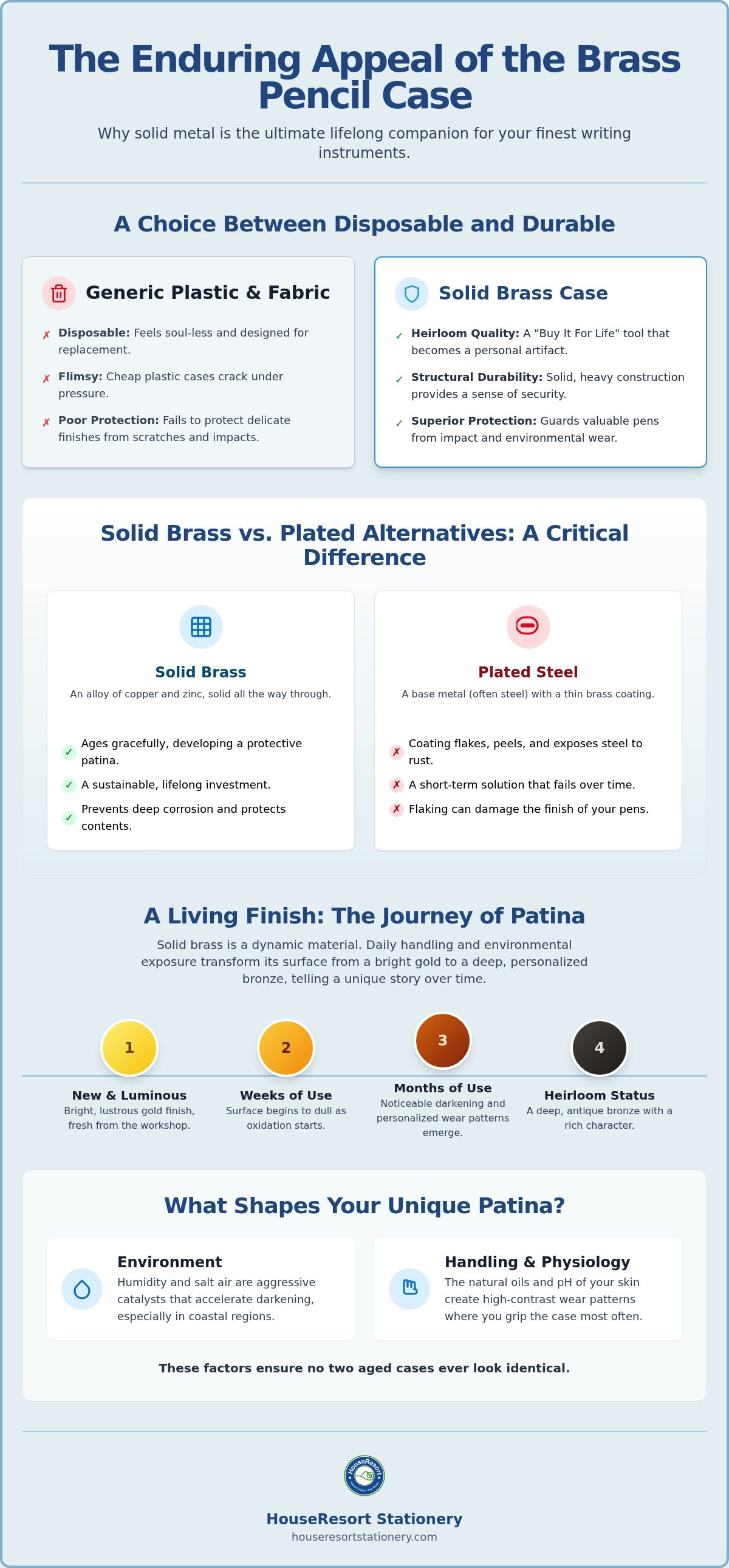
A brass pencil case is a specialized storage tool crafted from heavy, solid brass. It is prized by collectors and enthusiasts for its significant weight and structural durability. Unlike the generic plastic or fabric alternatives found in mass-market office supply stores, these cases are designed to protect delicate writing instruments from impact and environmental wear. They represent a return to intentionality. In a world increasingly dominated by disposable goods, a brass case stands as a permanent fixture on the desk. It is more than a simple container; it is a precision-engineered vessel for your most valued tools.
The appeal of analog tools lies in their tactile nature. Metal cases offer a sensory experience that plastic simply cannot replicate. There is a specific acoustic quality to the click of a brass lid closing. It signals the start or end of a creative session. This sensory feedback is part of why high-quality materials remain relevant in 2026. They ground us in the physical world. A brass storage solution absorbs the marks of daily use, turning minor scratches into a narrative of your work. This durability is why heritage brands prioritize the legacy of craftsmanship over the convenience of mass production.
The Evolution of Brass in Professional Writing
Brass has a long history in professional drafting and architectural tool-making. Its natural resistance to corrosion and its machinability made it the standard for compasses, rulers, and dividers used by 20th-century designers. Today, this material is a staple for the Japanese stationery online store enthusiast. The weight of a solid brass case provides a sense of security. It doesn't slide across a desk or rattle loosely in a bag. It feels deliberate. This connection to industrial history gives the modern brass pencil case a sense of belonging among other professional-grade equipment.
Solid Brass vs. Plated Alternatives
Discerning the difference between solid brass and plated alternatives is critical for long-term value. Solid brass is an alloy primarily of copper and zinc. You can verify its authenticity by its heft and the specific way it reacts to atmospheric oxygen. The unique properties of brass allow it to develop a protective oxide layer, known as a patina, which prevents deeper corrosion. This is a hallmark of quality that collectors look for when investing in "Buy It For Life" products.
In contrast, brass-plated steel cases often fail over time. The thin coating can flake or peel, exposing the underlying metal to moisture and eventual rust. This flaking can even damage the finish of your fountain pens. Choosing solid brass is a more sustainable investment. It offers superior protection for oversized writing instruments and ensures your storage solution lasts as long as the pens it holds. It's a choice that reflects a commitment to quality and the preservation of fine tools.
The Science and Beauty of the Brass Patina
A brass pencil case is never a static object. Unlike chrome or stainless steel, which strive to remain frozen in their factory state, solid brass is a living material. It evolves. This evolution is most visible through the development of a patina. This darkening of the surface is a natural defense mechanism. It protects the underlying metal from deeper corrosion. For the collector, this process is the primary appeal of the material. Your case begins as a bright, lustrous gold. Over weeks and months of daily handling, it transitions into a deep, antique bronze. This change is a physical record of your work and your environment.
The emotional value of this process is significant. Every mark on the surface tells a story. Perhaps a darker spot indicates where you gripped the case during a specific project. A lighter area might show where it rubbed against the leather of your bag. This creates a tool that "remembers" your travels. It moves away from being a generic office supply and becomes a personal artifact. This sense of history is why heritage manufacturers prioritize raw, uncoated brass. It allows the user to participate in the final finishing of the product through simple, everyday use.
Environmental Factors Influencing Color
Several external variables dictate the speed and shade of your patina. Humidity and salt air are the most aggressive catalysts. If you live in a coastal region, your metal will darken much faster than in an arid climate. Your own physiology plays a role as well. Skin pH and natural oils vary between individuals. These oils create high-contrast wear patterns where your hands make frequent contact. The chemical reaction of brass oxidation involves the copper and zinc within the alloy reacting with oxygen and moisture to form a protective layer of copper oxide or carbonate on the surface. These factors ensure that no two cases ever look identical after a year of use.
Personalizing Your Patina
You have full control over the aesthetic trajectory of your brass pencil case. Some enthusiasts prefer to accelerate the aging process. This intentional aging can be achieved through exposure to sulfur or specialized aging solutions to create an immediate "heirloom" look. Others prefer the "clean slate" approach. By utilizing a polishing cloth or mild metal polish, you can return the case to its original golden shine. If you are unsure which path to take, refer to guides on proper care for brass to avoid damaging the structural integrity of the metal.
For a truly cohesive analog experience, many collectors pair their brass tools with a Traveler’s Notebook. Watching the leather soften and the brass darken in tandem creates a satisfying visual harmony. If you appreciate this evolving aesthetic, consider browsing our curated brass collection to find your next lifelong tool.
Choosing the Right Case for Your Writing Collection
Selecting the ideal brass pencil case involves more than an appreciation for the material. It requires a technical evaluation of your specific writing inventory. A case that is too shallow will force the caps of oversized fountain pens against the lid, potentially causing structural damage. You must measure the internal depth. Internal protection is another vital consideration. Some enthusiasts prefer raw metal interiors for the authentic "clink" sound of tools meeting brass. Others opt for cases with custom liners to prevent micro-scratches on precious resins. The choice depends on your tolerance for wear.
Portability is the final piece of the selection puzzle. Brass is inherently dense. A solid case can add significant weight to a leather messenger bag or briefcase. You must decide if the structural protection outweighs the extra grams. Many collectors find the security of a rigid metal shell is worth the trade-off. It prevents pens from being crushed or bent during transit. A well-fitted lid produces a distinct, resonant sound that confirms a secure closure. This acoustic feedback is a hallmark of quality craftsmanship.
Compatibility with Iconic Pens and Pencils
The Blackwing 602 pencil is a common benchmark for length. An unsharpened Blackwing is notably long, measuring approximately 200mm. Most compact brass cases are designed for instruments under 170mm. This means you'll need to use your pencils slightly before they fit comfortably inside. Girth also matters for fountain pen users. A Sailor Pro Gear is significantly thicker than a slender Lamy Safari. Ensure the internal height accommodates these wider barrels. This is especially vital if you carry pens filled with pilot iroshizuku bottled ink. A rigid, secure fit prevents caps from unscrewing and causing ink leaks in your bag.
Design Variations: Pressed vs. Cast Brass
Construction methods influence both the weight and the silhouette of your brass pencil case. Pressed plate designs, like those from Traveler’s Company, utilize a single sheet of brass. These are sleek and architectural. They fit perfectly into a minimalist daily carry kit. Cast brass cases are different. These are poured into molds, resulting in thicker walls and a rugged, industrial texture. They are significantly heavier. A cast case provides a stable, authoritative anchor for a maximalist desk setup. Your choice depends on whether you value mobility or a permanent presence on your workstation.
Care and Maintenance: Keeping Brass in Peak Condition
Maintaining a brass pencil case is a process of balance. While the material is celebrated for its durability, it isn't indestructible. Routine cleaning is the first line of defense. Small particles of grit or graphite dust can accumulate inside the case over time. If left unmanaged, this debris acts like sandpaper, causing micro-scratches on the delicate lacquer of your fountain pens. Use a dry, lint-free cloth to wipe the interior once a week. This simple habit preserves both the storage vessel and the instruments it holds.
The "metal smell" is another factor that new owners often notice. This scent is a chemical reaction between the copper in the brass and the natural oils on your skin. To manage this, wash the case with mild soap and warm water every few months. This removes the surface compounds responsible for the odor. Always dry the metal immediately with a soft towel. Leaving the case to air-dry can result in uneven water spots that are difficult to remove without a full polish.
Restoring the Original Shine
If you prefer a bright, modern aesthetic over a deep patina, you can easily reverse the oxidation process. Use a specialized mild metal polish or a natural alternative like a paste of lemon juice and baking soda. Apply the cleaner with a soft cloth and rub in circular motions. Focus on high-contact areas where oils have darkened the metal most significantly. Once the golden hue returns, buff the surface with a clean microfiber cloth. This restoration doesn't damage the structural integrity of the metal, but it does reset the visual history of the tool.
Long-term Storage and Protection
Brass is significantly harder than the resins and plastics used in most writing instruments. To prevent the case from scratching other items in your bag, consider using a soft fabric pouch for transport. This also helps mitigate "green corrosion," also known as verdigris. Verdigris occurs in high-moisture environments where the metal reacts with acetic acid or moisture. If you notice green spots forming, remove them immediately with a vinegar-soaked cloth to prevent permanent pitting. Finally, check the lid tension occasionally. If the closure feels loose, gently press the sides of the base inward to ensure a secure, lifelong fit.
Investing in quality storage is only the first step. Proper care ensures your tools remain functional for decades. Browse our selection of heritage brass tools to find a piece worth maintaining.
The HouseResort Collection: Curated Brass and Stationery
At HouseResort, our curation philosophy centers on the longevity of materials. We select manufacturers that honor the heritage of analog tools. The brass pencil case is a cornerstone of this collection. We prioritize brands like Traveler’s Company because their production methods, such as pressing a single solid brass plate, ensure structural perfection. These aren't just storage items. They're functional sculptures designed to last a lifetime. Our role as a Boutique Curator is to filter the market. We present only the most reliable options for your writing desk, ensuring every item meets a standard of professional excellence.
A sophisticated stationery setup relies on the synergy of materials. Brass provides the weight. Leather offers the warmth. Fountain pen-friendly paper provides the surface. When you combine a heavy metal case with a supple leather journal, you create a tactile experience that digital tools cannot match. This ecosystem extends beyond storage. Our inventory includes brass rulers, index clips, and writing instruments that age in tandem. This creates a visual harmony across your entire toolkit. Each piece develops its own story through use, resulting in a collection that feels deeply personal and intentional. This material coordination is what transforms a simple desk into a dedicated creative sanctuary.
Building Your Analog Toolkit
Your choice of storage should reflect your specific creative habits. If you enjoy fountain pen doodle journaling, you need a case that protects your varied nib sizes and prevents leaks. A rigid brass shell is ideal for this purpose. It keeps your sketching tools secure during travel and provides a stable weight on your notebook page. Pair your case with a premium leather journal to complement the metallic aesthetic. The darkening brass and the softening leather will eventually mirror each other's wear patterns. This is the hallmark of a well-curated analog kit. HouseResort remains the destination for connoisseurs who value this meticulous coordination of fine writing tools.
Shop the Curated Collection
Finding an authentic brass pencil case is a matter of trust. As an authorized retailer, we guarantee the provenance of every item in our catalog. Our selection includes heritage brands from Japan and Germany known for their technical precision and historical significance. We invite you to explore our full range of brass storage and accessories. Each product is chosen for its ability to evolve alongside its owner. It's time to move beyond disposable supplies and invest in tools that reward your attention over decades. Enhance your desk with our curated brass collection today and begin the journey of creating your own unique patina.
Secure Your Stationery Legacy
Choosing a brass pencil case is a commitment to quality that transcends the typical lifecycle of office supplies. You've seen how solid brass provides unmatched protection for your finest fountain pens while evolving into a deeply personal artifact through the patina process. It's a tool that doesn't just store your instruments; it records your creative journey. By prioritizing heritage craftsmanship over disposable alternatives, you ensure your writing tools remain secure for decades to come.
HouseResort Stationery acts as your trusted boutique curator, filtering the market to present only the finest options. We are an authorized retailer for iconic heritage brands like Traveler’s Company and Kaweco, ensuring every item meets the rigorous standards of fountain pen enthusiasts. We provide fast national shipping across the United States, moving your interest to action with frictionless efficiency. Explore our curated collection of solid brass stationery and cases to find a storage solution that reflects your passion for quality materials. Your finest writing instruments deserve a home that matures alongside them.
Frequently Asked Questions
Will a brass pencil case scratch my expensive fountain pens?
A raw metal interior can cause micro-scratches on delicate resin or lacquer finishes if the instruments rattle against the walls during transit. To prevent this, use a small velvet or leather pen sleeve before placing your pens inside. This layering provides the rigid structural protection of the metal exterior with the soft, cushioned contact of a fabric liner.
How do I stop my brass pencil case from tarnishing?
Preventing tarnish on a brass pencil case requires regular maintenance and strict environmental control. You should wipe the surface daily with a dry microfiber cloth to remove skin oils and keep the case in a low-humidity environment. If you prefer the original gold shine, apply a specialized metal polish every few weeks to strip away the early stages of oxidation.
Is a solid brass pencil case too heavy for a school or work bag?
Solid brass is significantly denser than aluminum or plastic, typically weighing between 150 and 250 grams depending on the wall thickness. While this adds a noticeable heft to a daily carry kit, most professionals find the weight manageable compared to the security it provides. It acts as a protective shield that prevents heavier items from crushing your writing tools.
Does the brass case fit unsharpened Blackwing pencils?
Standard cases generally don't accommodate unsharpened Blackwing 602 pencils. An unsharpened Blackwing measures approximately 201mm, whereas most heritage-style cases are designed for a maximum internal length of 170mm to 180mm. You'll need to use your pencils until they've been sharpened down by about two inches before they fit securely within a standard-sized metal storage solution.
What is the difference between brass and bronze stationery?
The primary difference lies in the alloy composition and the resulting color profile. Brass is an alloy of copper and zinc, yielding a bright, yellow-gold hue that eventually ages into a dark bronze. Bronze is an alloy of copper and tin, which is naturally more reddish-brown and is significantly harder. Most stationery tools use brass for its superior machinability and warmer aesthetic.
How can I tell if my pencil case is real solid brass or just plated?
You can identify solid brass by its weight and its reaction to a magnet. Solid brass is a non-ferrous alloy, meaning a magnet won't stick to it. If a magnet clings to the surface, the case is likely brass-plated steel. Additionally, solid brass is much heavier than plated alternatives and will reveal a consistent yellow metal when scratched, rather than a silver-colored core.
How long does it take for a brass patina to fully develop?
A noticeable patina usually begins to form within two to four weeks of daily handling. However, the deep, antique bronze finish that many collectors desire typically takes three to six months to fully stabilize. This timeline varies based on your local humidity levels and the natural acidity of your skin, which acts as a catalyst for the oxidation process.
Can I use a brass case for items other than pens and pencils?
The rigid construction of a brass pencil case makes it an excellent protective vessel for various small professional tools. Beyond writing instruments, these cases are frequently used to store precision drafting dividers, delicate architectural scales, or even specialized tech cables. Use a soft liner if the items are prone to surface scratches from contact with the raw metal interior.