
The Connoisseur’s Guide to Storing Fountain Pens Long Term (2026)
What if your most prized vintage celluloid or limited edition ebonite pen isn't just resting in a drawer, but is actually slowly self-destructing? Most collectors feel a deep sense of anxiety when tucking a favorite instrument away for a few months. You likely worry about ink turning into a permanent cement within the feed or the barrel material losing its structural integrity. Understanding how to store fountain pens long term is a vital skill for any serious enthusiast. It moves beyond simple organization into a preservation ritual that ensures your tools remain functional for decades.
We agree that a fine pen is more than a writing tool; it's a piece of craftsmanship that deserves meticulous care. In this guide, you'll learn how to master archival storage to protect your collection's value and performance. We'll provide a foolproof cleaning checklist and explain why maintaining a relative humidity between 30% and 50% is critical for materials like cellulose. You'll also discover the definitive rules for horizontal versus vertical storage and how to manage temperature ranges between 60°F and 70°F for the ultimate pen sanctuary.
Key Takeaways
- Perform a deep archival clean to neutralize internal chemical reactions and prevent ink from hardening into permanent feed blockages.
- Adopt horizontal orientation as your baseline for how to store fountain pens long term to mitigate pressure on internal seals and ink channels.
- Implement material-specific safeguards, including essential ventilation for celluloid and strict light-shielding protocols for vintage ebonite components.
- Select storage solutions featuring non-reactive linings like silk or high-quality velvet to preserve the delicate exterior finishes of heritage instruments.
The Preservation Ritual: Why Deep Cleaning is Non-Negotiable
Storing a pen with ink inside is a recipe for disaster. As the water content in the ink evaporates, the remaining dyes and chemicals crystallize into a stubborn sludge. This is particularly problematic in the narrow capillary channels of the feed. If you want to know how to store fountain pens long term, you must accept that a thorough cleaning is the foundation of preservation. Without a chemical reset, you risk permanent blockages that even an ultrasonic cleaner might struggle to resolve later.
A deep understanding of fountain pen components and inks is essential for this process. While standard dye-based inks are generally manageable, pigment-based and iron gall inks present a higher risk. Pigment inks contain solid particles that can lodge deep within the feed fins. Iron gall inks are acidic; they can cause significant corrosion if they interact with moisture and metal over a long period. A quick flush under a tap rarely suffices. Micro-deposits often hide in the nib housing or behind the converter's seal, waiting to harden during storage.
Steps for a Deep Archival Clean
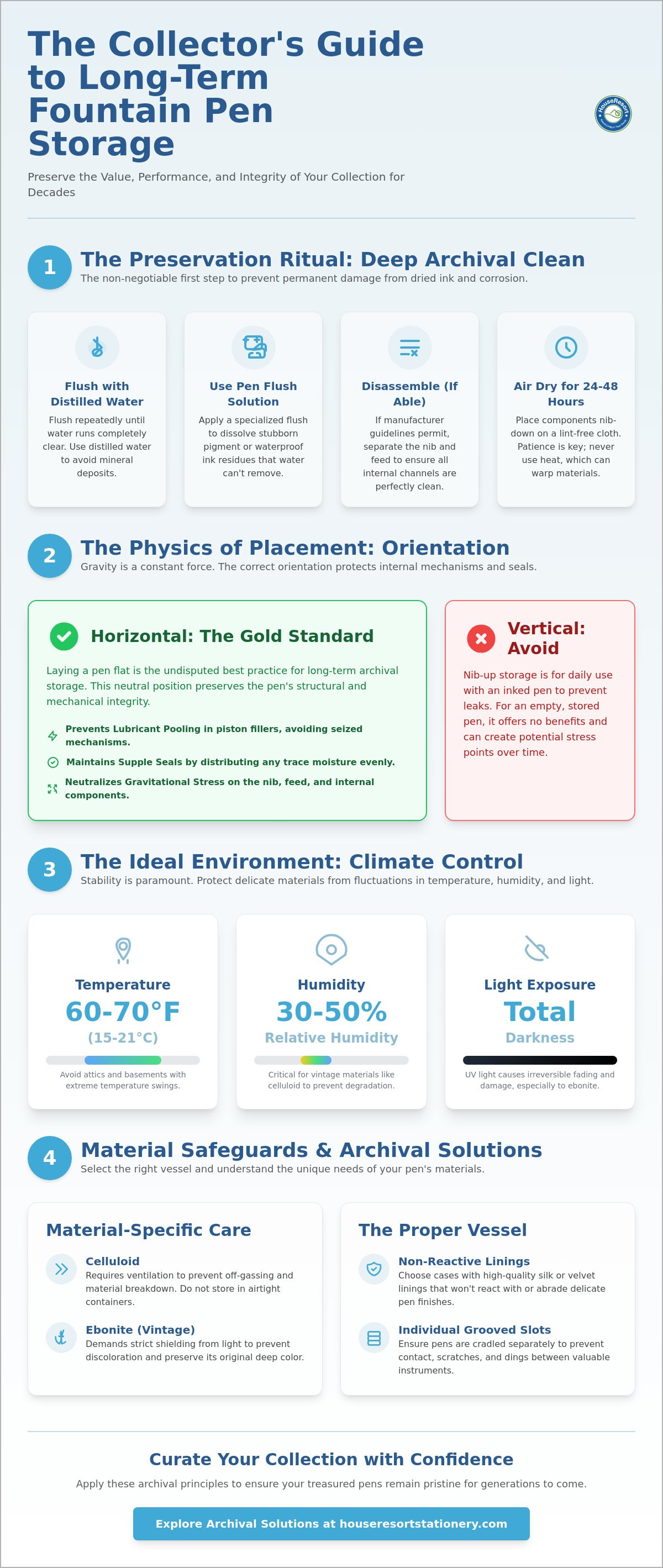
Begin by flushing the pen with room-temperature distilled water. Distilled water is preferable because tap water contains minerals like calcium that can leave white deposits inside your instrument. Continue this process until the water runs crystal clear. Next, use a dedicated pen flush solution. These specialized liquids contain surfactants and dilute ammonia designed to break down waterproof residues that water alone cannot touch. If your manufacturer's guidelines permit, disassemble the nib and feed. This allows you to inspect the feed channels and ensure no ink remains trapped in the internal housing.
The Drying Phase: Preventing Internal Corrosion
Moisture is a silent killer during long-term storage. Trapped water can lead to rusted spring clips, damaged internal seals, or even mold growth inside the cap. After cleaning, rest the nib downward on lint-free paper or a soft microfiber cloth to wick out any remaining moisture from the feed. You should air-dry all components for at least 24 to 48 hours before reassembly. Never use external heat sources like hair dryers. High temperatures can warp delicate resin bodies or cause modern plastics to become brittle. Patience is the curator's greatest tool; ensuring every component is bone-dry is the only way to master how to store fountain pens long term without risking structural damage.
The Physics of Placement: Horizontal vs. Vertical Orientation
Gravity is an invisible force that dictates the lifespan of your writing instruments. When considering how to store fountain pens long term, the physical orientation of the pen body determines how internal fluids and seals behave over months of stillness. While a daily user might favor a specific angle for immediate ink flow, the archival collector must prioritize structural stability. A pen left in the wrong position for years can suffer from seized mechanisms or degraded internal gaskets.
Why Horizontal is the Collector's Choice
Laying a pen flat is the undisputed gold standard for preservation. This position ensures that any microscopic amounts of air or moisture remaining after your Deep Cleaning for Long-Term Storage are distributed evenly across the barrel. For piston-filling mechanisms, horizontal rest prevents the internal lubricant from pooling at one end of the reservoir. This maintains a supple seal and prevents the piston from seizing. It's a simple way to maintain the mechanical health of the instrument without active maintenance.
Horizontal storage also optimizes the footprint of your collection. Professional chests and trays are designed with grooved slots that cradle the pen's body, preventing contact between adjacent instruments. This setup protects the finish while keeping the nib assembly neutral. If you're curating a growing collection, choosing fine fountain pens from heritage makers who prioritize balanced weight distribution makes horizontal resting even more effective for long-term alignment. It creates a predictable environment where the pen's components aren't fighting gravitational pull.
The Myth of Nib-Up Storage for Long-Term Care
Many enthusiasts mistakenly apply daily use logic to archival preservation. Storing a pen nib-up is excellent for preventing leaks in an inked instrument, but it serves little purpose for a pen that's been properly decommissioned. In fact, vertical storage can encourage any trace sediments or remaining ink particles to settle at the very bottom of the barrel or converter. Over years, this can lead to a "hard start" or a clogged feed when you finally decide to re-ink the pen. It's better to keep everything on a level plane.
The most dangerous orientation for long-term holds is nib-down. Gravity will inevitably pull any missed moisture or residual ink into the cap liner. This creates a humid micro-climate that can lead to nib corrosion or cap staining. For cartridge and converter systems, vertical pressure can also stress the friction-fit seals where the converter meets the section. By sticking to a horizontal plane, you eliminate these gravitational risks and ensure your pen remains in a state of perfect stasis. This is the simplest yet most effective secret for anyone learning how to store fountain pens long term.
Material Integrity: Protecting Celluloid, Ebonite, and Luxury Finishes
Material chemistry is the silent engine of your collection. While previous sections focused on cleaning and orientation, the physical composition of the pen barrel introduces a new set of chemical variables. High-end instruments often utilize organic or reactive materials that require specific environmental handling. Understanding these nuances is the core of how to store fountain pens long term. If you ignore the chemical needs of your pens, even a clean, horizontal instrument can suffer irreversible damage from its own internal composition.
The Science of Outgassing in Vintage Materials
Vintage celluloid is a living material that remains chemically active decades after manufacture. It undergoes a process called outgassing, where it slowly releases nitric acid. If you seal a celluloid pen in an airtight container, these gases become trapped and accelerate the decomposition of the material. This phenomenon, often called "celluloid rot," can destroy a pen in months. Signs include a distinct vinegar-like odor or a sudden clouding of the transparent sections. To prevent this, ensure your storage solution allows for minimal airflow. Never store vintage celluloid in airtight plastic bags or vacuum-sealed containers; they need to breathe to remain stable.
Protecting Light-Sensitive Finishes
Ebonite, or hard rubber, presents a different challenge. The material's durability comes from a high sulfur content, which can range from 25% to 80% in high-quality feeds and barrels. When exposed to ultraviolet light or excessive moisture, this sulfur migrates to the surface. This causes the deep black finish to oxidize into a dull, brownish-green hue. This reaction is permanent and significantly reduces the value of the instrument. Opaque storage is a necessity for any collector looking for Japanese stationery or heritage western brands that utilize ebonite components.
Luxury finishes like Urushi lacquer and Raden (mother-of-pearl inlay) are remarkably durable but sensitive to extreme humidity shifts. Urushi requires a stable environment to prevent the lacquer from becoming brittle. Similarly, Raden inlays can lift if the underlying material expands or contracts too rapidly. Storing these items in individual pouches made of acid-free tissue paper or soft silk prevents micro-abrasions. For pens with sterling silver or solid brass components, oxidation is inevitable. Using anti-tarnish strips within your pen chest is an effective way to neutralize the sulfur in the air. This keeps your metal accents bright without requiring aggressive polishing when you decide how to store fountain pens long term in a multi-material collection.
Environmental Controls: Managing Light, Humidity, and Temperature
Precision is the hallmark of a true curator. While generic advice often suggests a "cool, dry place," professional archival preservation requires specific, measurable metrics. When you're learning how to store fountain pens long term, you're essentially managing a micro-climate. Environmental volatility is the primary cause of cracked resins, seized pistons, and faded finishes. Establishing a stable "analog sanctuary" protects your investment from the slow decay caused by fluctuating surroundings and invisible atmospheric shifts.
Ideal Archival Conditions
Humidity is a delicate balancing act for the collector. You should target a relative humidity range between 45% and 55%. If the environment is too damp, you invite mold growth within cap liners and wooden chests. Conversely, excessive dryness is just as dangerous for your instruments. Low humidity causes internal seals and rubber gaskets to shrink and become brittle over time. This leads to catastrophic leaks once the pen is eventually re-inked. A simple hygrometer is an essential tool for monitoring these levels within your storage area.
Temperature stability is the second pillar of preservation. Maintain a consistent range between 60°F and 70°F (15°C to 21°C). Rapid thermal expansion and contraction put immense stress on the points where metal clips or bands meet resin bodies. These materials expand at different rates; frequent shifts can lead to hairline fractures in the barrel. Avoid basements and attics at all costs. These areas suffer from the most extreme seasonal shifts and moisture spikes, making them unsuitable for any high-value collection.
Light as a Degradation Factor
Light is a cumulative force of destruction. While we've previously discussed the specific risk to ebonite, even modern resins can suffer from yellowing or loss of luster under prolonged exposure. Ambient indoor light contains enough UV energy to alter the chemical bonds of high-end plastics over several years. This damage is often subtle until it's irreversible. Using solid wood chests or cabinets with UV-filtered glass is the best way to mitigate this risk while still enjoying the visual appeal of your collection.
You can test your chosen storage area for light leakage by placing a light-sensitive test strip inside your case for 48 hours. If the strip shows even a slight change, your pens are receiving too much exposure. For those curating a professional collection, opaque storage is always the safest choice. By maintaining this "Golden Zone" of environmental control, you ensure that every instrument remains in a state of perfect stasis. This meticulous attention to detail is what separates a simple drawer of pens from a preserved archive of writing history.
Archival Solutions: Selecting the Proper Vessel for Your Collection
The final layer of defense for any collection is the physical container that cradles it. While environmental controls manage the air, the storage vessel manages the tactile reality of preservation. Selecting a high-quality home for your instruments is the final step in mastering how to store fountain pens long term. A poor choice here can undo months of careful cleaning and climate monitoring. You must look for materials that are chemically inert and physically supportive to ensure your pens remain in showroom condition.
Non-reactive linings are essential. Many entry-level cases use synthetic fabrics or treated glues that can off-gas over time, potentially clouding high-clarity resins. Professional curators prioritize natural silk or high-density cotton velvet. These materials provide a soft, non-abrasive surface that prevents micro-scratches. You should also audit any case featuring elastic loops. Over years of stillness, "grabby" or overly tight elastics can leave permanent pressure marks on soft plastics or vintage celluloid. If a pen is being stored for more than a year, a grooved tray is always superior to an elastic strap.
Professional Storage Options
Wooden pen chests are the gold standard for long-term, ventilated stability. They provide a sturdy barrier against light while allowing for the subtle airflow necessary for vintage materials. If you prefer leather, you must ensure it's vegetable-tanned. Chrome-tanned leathers often contain residual acidic salts that can tarnish silver trim or corrode gold plating over several years. For those who want an extra layer of security, individual pen sleeves made of acid-free paper or silk can be used within a larger chest. This prevents any contact between the pen body and the storage tray's structural materials.
Waking Up Your Collection
Restoring a pen to service after years of storage requires a gentle touch. Do not immediately fill the pen with ink. Instead, perform a "dry" mechanical check of the piston or converter to ensure the seals haven't seized. If the mechanism feels stiff, do not force it. A quick flush with room-temperature distilled water can help re-hydrate internal gaskets that may have slightly contracted. This step also clears out any microscopic dust that might have settled in the feed during its period of rest.
For the first ink cycle after a long hold, select a well-behaved, pH-neutral ink. This is not the time for heavy shimmering particles or high-sheen formulas. A gentle choice, such as Pilot Iroshizuku bottled ink, is ideal because of its excellent flow characteristics and easy-to-clean nature. Once you've confirmed the pen is performing perfectly, you can return to more specialized inks. This measured re-entry protocol is the final hallmark of a true connoisseur who understands how to store fountain pens long term while respecting the longevity of their tools.
Preserving the Legacy of Your Collection
Mastering the art of archival care transforms a simple hobby into a lifelong stewardship of craftsmanship. By committing to a deep archival clean and maintaining the "Golden Zone" of environmental stability, you ensure that your most cherished instruments remain functional and beautiful for decades. You now possess the specialized knowledge of material chemistry and gravitational physics required to protect everything from vintage celluloid to modern Japanese urushi. These small, meticulous adjustments create a sanctuary where your tools can rest without the risk of decay.
Understanding how to store fountain pens long term is the ultimate sign of a true connoisseur. It's about more than simple organization; it's a ritual that respects the heritage of the makers and the tactile joy of the analog experience. Whether you're resting a single heirloom or managing a vast archive, these protocols provide the peace of mind that your collection is safe. As an authorized retailer of heritage brands and specialists in luxury writing tools, we're dedicated to helping serious enthusiasts protect their investments. Explore our curated selection of fine fountain pens and archival storage to find the perfect home for your next acquisition. Your collection represents a unique history of design and personal expression. With the right care, those stories will continue to flow for generations to come.
Frequently Asked Questions
Can I store a fountain pen long term with ink inside?
You should never store a fountain pen for more than a few weeks with ink inside. As the water evaporates, the dyes and chemical components crystallize into a hard sludge that can permanently block the feed's capillary channels. This risk is even higher with pigment or iron gall inks. For those learning how to store fountain pens long term, decommissioning the pen by flushing it completely is a mandatory step for preservation.
How often should I clean a fountain pen that is in storage?
You don't need to clean a pen that is already stored empty and dry unless you notice signs of environmental dust or material bloom. If you've performed a deep archival clean, the pen is in a state of chemical stasis. It's wise to perform a quick water flush every few years just to re-hydrate internal seals. This prevents rubber or silicone gaskets from becoming brittle over long periods of stillness.
Is it better to store pens horizontally or vertically?
Horizontal storage is the preferred orientation for long-term archival holds. This position ensures that gravity doesn't pull residual moisture into the cap or cause internal lubricants to pool at one end of the reservoir. Vertical storage is generally reserved for inked pens in daily use to prevent leaking. By keeping your collection level, you maintain even pressure on all internal seals and prevent the nib assembly from drying out or corroding.
Does fountain pen ink expire while in the bottle or the pen?
Ink can certainly degrade over time, especially when left inside a pen where it's exposed to air and contaminants. In the bottle, most inks last for many years if kept in a cool, dark place. However, ink inside a pen can develop mold or "Slime in the Bottle" (SITB) due to biological activity. Always inspect your ink for unusual odors or stringy textures before re-inking a pen that has been stored for a long time.
What is the best way to store vintage celluloid pens?
Vintage celluloid requires a breathable environment to prevent the buildup of acidic nitric gases. You should avoid airtight plastic bags or vacuum-sealed cases, as these trap outgassing vapors and accelerate the process of celluloid rot. Instead, use ventilated wooden chests or individual cloth sleeves. Keeping celluloid pens separate from your modern collection is also a prudent step to prevent any chemical cross-contamination between different barrel materials.
How do I prevent my fountain pen nib from rusting during storage?
Ensuring the nib and feed are 100% dry before storage is the only way to prevent corrosion. Even gold nibs are often attached to steel clips or internal housing units that can rust if moisture is trapped inside the cap. Maintain a stable relative humidity between 45% and 55% in your storage area. This provides enough moisture to keep seals supple without creating the damp conditions that promote metal oxidation.
Should I disassemble my pen completely before storing it?
Complete disassembly is rarely necessary and can actually stress friction-fit components over time. You should only remove the nib and feed if you're dealing with stubborn pigment residues that won't flush out with standard solutions. For most collectors, a thorough flush with a dedicated pen cleaner and a 48-hour air-drying period is sufficient. Always follow the specific manufacturer's guidelines for your particular model to avoid damaging the internal housing.
What temperature is too hot for fountain pen storage?
Temperatures exceeding 70°F (21°C) are too hot and begin to pose risks to delicate resin and ebonite bodies. High heat causes materials to expand at different rates, which may lead to hairline cracks or warped barrels. To master how to store fountain pens long term, you must avoid areas prone to heat spikes, such as windowsills or near radiators. A stable, climate-controlled room is the only safe environment for a luxury collection.