
The Ultimate Lamy Buying Guide: Choosing Your Perfect Writing Instrument in 2026
The perfect writing instrument is rarely found by accident; it is curated through a deep understanding of materials and mechanics. You likely appreciate the functional beauty of a lamy pen, but the choice between a resin Safari and an aluminum AL-star often feels like a technical puzzle. It's frustrating to worry about ink compatibility or whether a specific nib size will feather on your favorite stationery. We believe that choosing a tool for life should be a rewarding discovery, not a source of confusion.
This guide will help you discover the ideal instrument for your writing style by exploring the brand's Bauhaus roots and modular design. We'll clarify the differences in the 2026 catalog, including how the integration of Japanese technology like the Kuru Toga engine has updated these German classics. You can expect a clear breakdown of the model hierarchy, a simple guide to nib selection, and a curated list of this year's essential releases. By the end, you'll have the technical knowledge to select your next writing tool with total certainty.
Key Takeaways
- Decode the Bauhaus design philosophy to understand how materials like ABS plastic and Makrolon create a balance between weight and durability.
- Distinguish between the classic Safari, the aluminum AL-star, and the flagship 2000 to find the lamy model that suits your professional needs.
- Learn to utilize the interchangeable nib system to customize your line width without the expense of purchasing multiple pens.
- Discover how to integrate analog charm with modern productivity through hybrid rollerballs and digital writing tools.
- Gain insights on pairing your selection with specific Japanese stationery to achieve the perfect tactile feedback for your handwriting.
The Bauhaus Influence: Why Lamy Dominates Modern Stationery
Design transcends aesthetic appeal when it prioritizes the user's experience above all else. For decades, the lamy brand has served as the primary ambassador for the Bauhaus movement in the stationery world. This "form follows function" philosophy ensures that nothing on the pen is decorative without purpose. Every line is intentional. Every material is selected for its tactile response and longevity. While other manufacturers chase fleeting trends with ornate filigree, this German powerhouse maintains a minimalist "Lamy Look" that feels as modern in 2026 as it did in the 1960s.
The durability of these instruments stems from high-performance materials. The Safari series uses ABS plastic, the same impact-resistant material used in LEGO bricks, making it nearly indestructible for daily carry. Premium models like the 2000 utilize Makrolon, a reinforced fiberglass polycarbonate that offers a warm, organic feel while remaining incredibly tough. This focus on materiality is why these pens are often passed down through generations as reliable heirloom tools.
A Legacy of German Engineering
The journey began in 1930 when C. Josef Lamy established his firm in Heidelberg. You can explore the full Lamy company history to see how they evolved from a small manufacturer into a global icon of modernism. The pivotal moment arrived in 1966 with the release of the Lamy 2000. It discarded the flashy gold and brass of the era in favor of brushed stainless steel and Makrolon. By maintaining strict in-house production and rigorous quality control, the brand ensures that each nib and feed meets precise specifications before leaving the factory.
Functionality for the Modern Writer
Ergonomics is at the heart of the design language. The signature recessed grip sections are not merely stylistic; they guide your fingers into a tripod posture that reduces writing fatigue during long sessions. This makes them the industry standard for students and professionals alike. Other functional details include:
- The Ink Window: A simple cutout that allows you to monitor your ink level at a glance, preventing the frustration of a dry pen mid-sentence.
- Spring-Loaded Clips: Found on models like the AL-star and 2000, these clips are engineered to grip thick notebook covers or pocket seams without losing their tension over time.
- Interchangeable Parts: The modular nature of the components allows for easy maintenance and customization, reflecting a sustainable approach to luxury that values longevity over disposability.
Comparing the Classics: Safari vs. AL-star vs. Lamy 2000
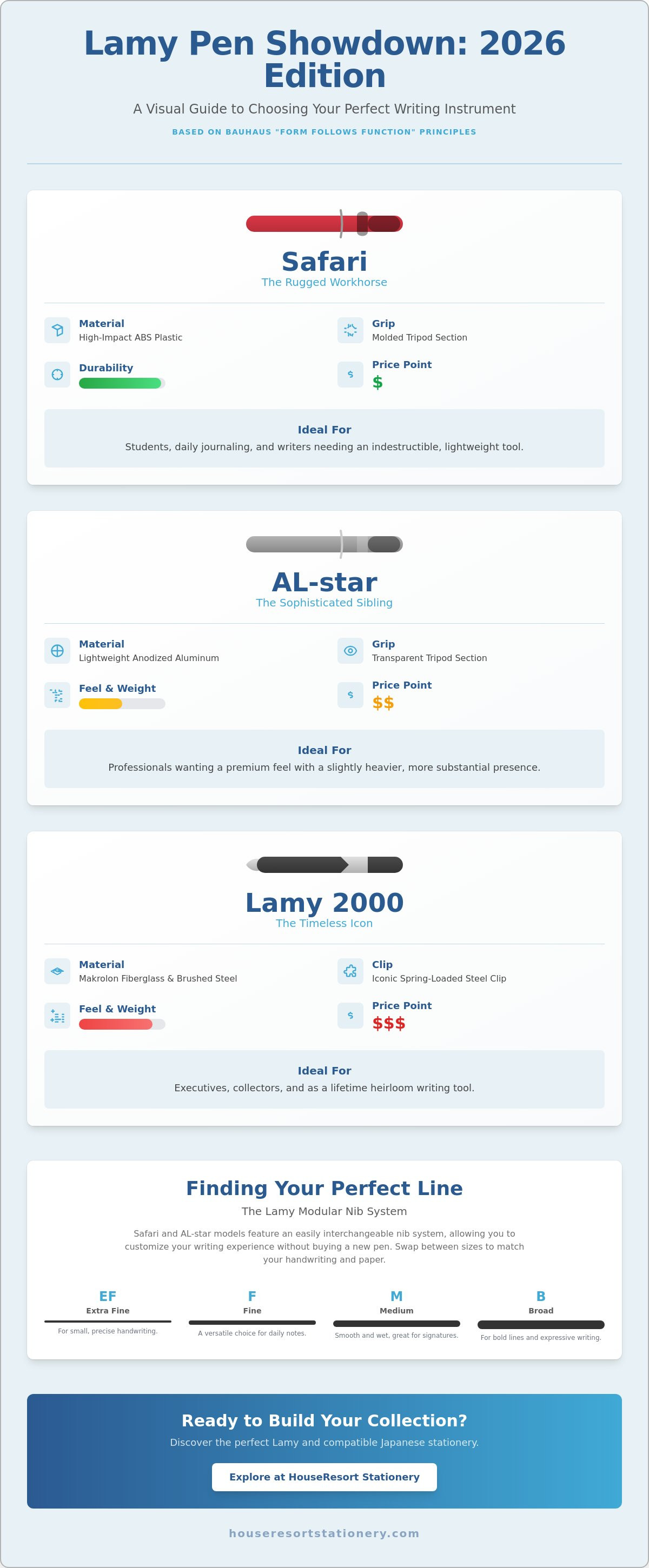
Choosing between these three icons requires an understanding of how weight and material interact with your writing surface. While the lamy brand maintains a consistent design language across its catalog, the tactile feedback of a plastic Safari differs greatly from the cool precision of an aluminum AL-star or the warm, textured grip of a Lamy 2000. Understanding Lamy's design philosophy is the first step toward realizing that these aren't just pens at different price points; they are tools designed for specific ergonomic needs. Your choice will ultimately depend on whether you value lightweight agility or the substantial presence of a professional instrument.
Weight plays a critical role in long-form writing fatigue. A lighter pen allows for rapid, airy strokes, while a heavier body provides the momentum needed for a steady, deliberate hand. To find the right balance for your desk, you might consider how these materials respond to different paper weights. A heavier aluminum pen often performs better on smooth, coated Japanese paper, whereas a lighter plastic model offers superior control on toothy, textured journals.
The Safari and AL-star: Siblings in Design
The Safari is built from impact-resistant ABS plastic. It's the rugged, dependable choice for writers who need an indestructible daily carry. Because it's so lightweight, it has become a favorite for fountain pen doodle journaling for beginners. The AL-star, its sophisticated sibling, swaps plastic for anodized aluminum. This material upgrade provides a more premium feel and a slightly increased weight. A unique feature of the AL-star is its transparent grip section, which allows you to see the ink flowing through the feed. Both models use the same reliable steel nibs, making them versatile entry points into the hobby.
The Lamy 2000: A Tier of Its Own
The Lamy 2000 stands apart as a masterpiece of functional minimalism. It features a semi-hooded 14k gold nib that offers a subtle springiness steel nibs can't replicate. It's famous for having a specific "sweet spot"; once you find the correct writing angle, the pen glides with unparalleled smoothness. Unlike the cartridge-based Safari or AL-star, the 2000 uses a high-capacity piston-filling mechanism. The body is crafted from brushed Makrolon, a fiberglass material that feels organic and warm to the touch. It doesn't show fingerprints and develops a soft luster over years of use. If you're ready to invest in a lifelong writing companion, you can browse our curated Lamy collection to compare these finishes in person.
Finding Your Perfect Line: The Modular Lamy Nib System
The modularity of the lamy system is its greatest technical achievement. Unlike brands that require a separate purchase for every nib grade, this ecosystem allows you to swap tips in seconds. This flexibility has contributed significantly to the resurgence of fountain pens among modern collectors who value utility. You can start your morning with an Extra Fine (EF) for rapid note-taking and switch to a 1.9mm stub for evening calligraphy. It transforms a single pen into a multi-purpose toolkit.
Steel nibs like the Z50 are the industry standard for durability. They offer a firm, reliable feel that suits beginners and professionals alike. If you desire a softer, more luxurious experience, the Z55 or Z57 14k gold nibs are worthwhile upgrades. These gold options provide a subtle springiness that absorbs the vibration of the paper, resulting in a smoother glide. For those seeking artistic flair, the calligraphy range (1.1mm, 1.5mm, and 1.9mm) features flat, "stub" tips. These nibs create natural line variation, making your vertical strokes thick and your horizontal strokes thin without requiring any special pressure or advanced technique.
Standard Nib Sizes for Daily Tasks
Selecting the right size depends on your paper choice and your physical grip. Left-handed writers often struggle with smudging as their hand follows the pen across the page. The LH nib is ground at a specific angle to accommodate "over-writers," ensuring the ink flows even at unconventional angles. For standard office paper, which is often absorbent and prone to bleeding, a Fine (F) nib is the safest bet to maintain legibility. Lamy's broad nibs feature a generous "sweet spot" that allows high-shading inks to pool beautifully, revealing the multi-tonal properties of your favorite colors.
How to Swap Your Lamy Nib
Swapping is simple and requires no specialized tools. Use the "tape method" by placing a small piece of transparent tape over the top of the nib and pulling it gently away from the feed. This prevents scratches and provides a secure grip. Before sliding a new nib on, take a moment to flush the feed with room-temperature water to ensure consistent ink flow. We encourage you to experiment with different nib grades to find the perfect match for your traveler's notebook or planner. This modular approach ensures your lamy instrument evolves alongside your changing creative needs.
Beyond Fountain Pens: Rollerballs, Ballpoints, and Digital Tools
While fountain pens are the soul of the collection, the lamy ecosystem extends into highly functional everyday carry (EDC) tools and cutting-edge digital interfaces. For writers who prioritize speed or work in environments where a liquid-ink nib isn't practical, these alternatives offer the same Bauhaus ergonomics without the maintenance. The 2026 lineup specifically emphasizes the "digital paper" revolution, ensuring that your tactile preferences aren't lost when moving to a screen. These instruments are designed to be reliable companions that adapt to the pace of modern life while maintaining a sophisticated aesthetic.
Rollerball vs. Ballpoint: Which is for you?
Choosing between a rollerball and a ballpoint comes down to ink chemistry and your specific writing environment. The M63 rollerball refill provides a fluid, low-friction experience that mimics a fountain pen. It's ideal for those who enjoy a wet, dark line but need the convenience of a capped instrument. Conversely, the M16 ballpoint refill uses a high-viscosity, oil-based ink that excels on carbon copies, glossy receipts, and standard office paper. While rollerballs offer a more expressive line, ballpoints provide superior longevity. A single M16 "Giant" refill can often last for months of heavy note-taking, making it the more economical choice for those who write thousands of words weekly. For the professional seeking a discreet yet iconic tool, the Lamy 2000 ballpoint remains the ultimate EDC choice. Its brushed Makrolon body and heavy-duty clip make it virtually indestructible in a briefcase or pocket. If you prefer a click-action mechanism, the Lamy Swift is a marvel of push-button engineering. Its clip retracts into the barrel when the pen is in use, which prevents it from snagging on your hand while you write.
The 2026 Digital Frontier
The 2026 digital landscape has seen a massive shift toward e-ink devices, and the AL-star EMR is the primary bridge to this new world. Utilizing Wacom’s electromagnetic resonance technology, this stylus requires no batteries or charging. It's compatible with a wide range of Android tablets and digital notebooks, offering a pressure-sensitive experience that feels remarkably natural. This tool isn't just a plastic accessory; it features the same weighted aluminum body and recessed grip found on the analog version. Digital writing still benefits from lamy's signature ergonomic design, as it prevents the hand fatigue often associated with the thin, slippery styluses bundled with modern electronics. For those who frequently switch between physical journals and digital screens, the Safari Twin Pen offers a hybrid solution with both a ballpoint refill and a stylus tip in one body.
If you're ready to upgrade your mobile office, you can explore our full range of Lamy rollerballs and digital tools to find your next daily companion.
Building Your Lamy Collection at HouseResort Stationery
Building a lamy collection is an intentional act of curation. It requires a balance between the functional needs of your daily tasks and the aesthetic joy of high-quality materials. As an authorized retailer, HouseResort Stationery provides the certainty of authenticity that a generic marketplace cannot offer. This guarantee is vital when investing in precision-engineered tools. Our current selection includes the sought-after 2026 Special Edition colors, which provide a modern twist on the classic Bauhaus silhouettes. To ensure your instrument remains a lifelong companion, we provide the necessary maintenance tools, from the Z28 converter for those who enjoy the ritual of bottled ink to the T10 cartridges for writers on the move.
Curated Pairings for Enthusiasts
The synergy between a pen and its paper determines the quality of the written word. We recommend pairing your pens with Japanese stationery to truly experience the smoothness of the nib. Paper from Midori and Hobonichi is specifically designed to handle the wet flow of fountain pen ink. This prevents the frustration of feathering or ghosting on the page. Choosing the right ink is equally important. The Lamy Crystal Ink series offers deep, complex colors that stand out in a journal, while the standard T52 bottles remain the reliable workhorse for professional office work. Protecting these tools is a priority for any collector. Our premium brass pencil cases offer a secure, stylish home for your instruments, allowing them to age gracefully and develop a unique patina alongside your notebooks.
The HouseResort Difference
We take a meticulous approach to every order. Our specialists inspect every nib before it leaves our Atlanta locations or our online store. This extra step ensures that the alignment and ink flow meet our boutique standards before the pen ever touches your paper. We focus on a manufacturer-first philosophy. This means we treat the creators and their heritage as the primary language of our shop. It isn't just about a transaction; it's about a shared passion for the tactile nature of analog tools. We invite you to explore our inventory at your own pace, moving through the catalog without the pressure of aggressive sales tactics. If you're ready to begin or expand your journey, shop our full curated Lamy collection here and discover why these instruments remain the industry standard in 2026.
Find Your Signature Tool for 2026
Selecting a writing instrument is an investment in your personal creative process. You now understand how the Bauhaus philosophy shapes every lamy pen, from the impact-resistant Safari to the gold-nibbed 2000. These tools aren't just for putting ink to paper; they're modular systems that adapt to your evolving style. Whether you choose the tactile feedback of a physical nib or the modern precision of an EMR stylus, you're participating in a legacy of German engineering that prioritizes function above all else.
As an authorized retailer with expert niche knowledge, we ensure every instrument is authentic and meticulously inspected. We provide fast national shipping to get these curated tools onto your desk without delay. It's time to move beyond standard office supplies and embrace a tool that reflects your appreciation for craftsmanship. Explore the Curated Lamy Collection at HouseResort Stationery and discover the perfect balance of form and function for your desk. We're excited to help you find an instrument that brings joy to every word you write.
Frequently Asked Questions
Are Lamy fountain pens good for beginners?
Lamy fountain pens are excellent for beginners because of their impact-resistant construction and ergonomic grip sections. The Safari model is often the first choice for students due to its durability. It features a tripod grip that naturally teaches correct finger placement. Because the nibs are interchangeable, a new writer can experiment with different line widths without needing to purchase an entirely new pen body.
What is the difference between a Lamy Safari and a Lamy AL-star?
The primary difference lies in the body material and the grip aesthetic. The Safari is crafted from ABS plastic, while the AL-star utilizes lightweight anodized aluminum. Additionally, the AL-star features a smoky, transparent grip section that reveals the inner workings of the feed. While both share the same internal mechanics, the AL-star offers a slightly more substantial, premium feel during long writing sessions.
Can I use other brands of ink in my Lamy fountain pen?
You can use any brand of bottled fountain pen ink as long as you install a lamy Z28 converter. While the T10 cartridges are proprietary and only fit this brand's pens, the converter allows access to thousands of colors from heritage ink makers. It's important to avoid using calligraphy or India inks; these contain shellac or pigments that will permanently clog the delicate feed system.
Why is my Lamy pen scratchy and how do I fix it?
A scratchy feel is often caused by misaligned nib tines or using low-quality, toothy paper. You can often fix this by gently cleaning the nib and feed with room-temperature water to remove dried ink particles. If the scratchiness persists, the modular design makes it easy to slide off the old nib and replace it with a fresh Z50 steel tip for a smooth writing experience.
What does the 'EMR' stand for in Lamy digital pens?
EMR stands for Electromagnetic Resonance, a technology developed by Wacom that allows the stylus to communicate with a digital screen. This technology is found in the AL-star EMR and Safari Twin Pen. It's a battery-free system, meaning you never need to charge the pen. It provides high pressure sensitivity, making it a favorite for digital artists and professionals using e-ink tablets or Android devices.
How often should I clean my Lamy fountain pen?
You should clean your fountain pen every four to six weeks or whenever you decide to change ink colors. Regular maintenance prevents ink from drying inside the feed, which can lead to flow issues. Simply flush the section with cool, clear water until the liquid runs clear. For stubborn clogs, a drop of mild dish soap in the water can help break down older ink deposits.
Which Lamy nib is best for left-handed writers?
The LH nib is the best choice for left-handed writers who struggle with smudging or skipping. This specific nib is ground with a slight oblique angle to accommodate the "push" motion and the steeper writing angle used by many lefties. It ensures a consistent ink flow even when the hand moves across the freshly written line, making it a vital tool for smudge-free journaling.
Is the Lamy 2000 worth the investment compared to the Safari?
The lamy 2000 is a significant upgrade for serious collectors due to its 14k gold nib and high-capacity piston filling system. While the Safari is a durable entry-level tool, the 2000 offers a softer, more expressive writing feel and a seamless Makrolon body. It represents a jump from a functional student tool to a professional heirloom instrument that's designed to last for decades of daily use.