
Pilot Iroshizuku: The Ultimate Guide to Japan’s Most Iconic Fountain Pen Ink (2026)
A bottle of ink should be a curated centerpiece for your desk, not a utility tucked away in a drawer. Most enthusiasts eventually realize that a fountain pen is only as reliable as the fluid feeding its nib. If you've struggled with feathering on standard paper or expensive pens that suffer from hard starts, switching to pilot iroshizuku often feels like a revelation. These inks are celebrated for their "well-behaved" nature, offering a smooth flow that protects your investment while delivering the vibrant shading that collectors crave.
You likely agree that the tactile joy of writing is lost when colors appear flat or inconsistent. We promise to help you choose the perfect shade for your collection while explaining why this line is a global favorite. We'll look at the 24 standard colors inspired by the Japanese seasons, examine the functional engineering of the 50ml glass bottles, and review the performance standards Pilot has maintained since 1918. Whether you're seeking a professional blue or a poetic sunset hue, you'll discover why this ink remains the ultimate companion for your finest writing instruments.
Key Takeaways
- Learn why the name "Iroshizuku" translates to "coloring droplet" and how this line earned its reputation as a low-maintenance choice for fine writing instruments.
- Explore the 24 standard shades of pilot iroshizuku, including iconic bestsellers like Kon-peki and Yama-budo that are inspired by Japan's natural landscapes.
- Discover how to pair these "wet" inks with dry-writing nibs from brands like Sailor or Lamy to ensure a smooth, skip-free writing experience.
- Identify the best shades for your specific needs, whether you require professional tones like Shin-kai or expressive colors for creative journaling.
- Understand why purchasing from an authorized boutique ensures you receive authentic, fresh ink in Pilot's signature 50ml glass bottles.
What Makes Pilot Iroshizuku the Gold Standard for Fountain Pen Enthusiasts?
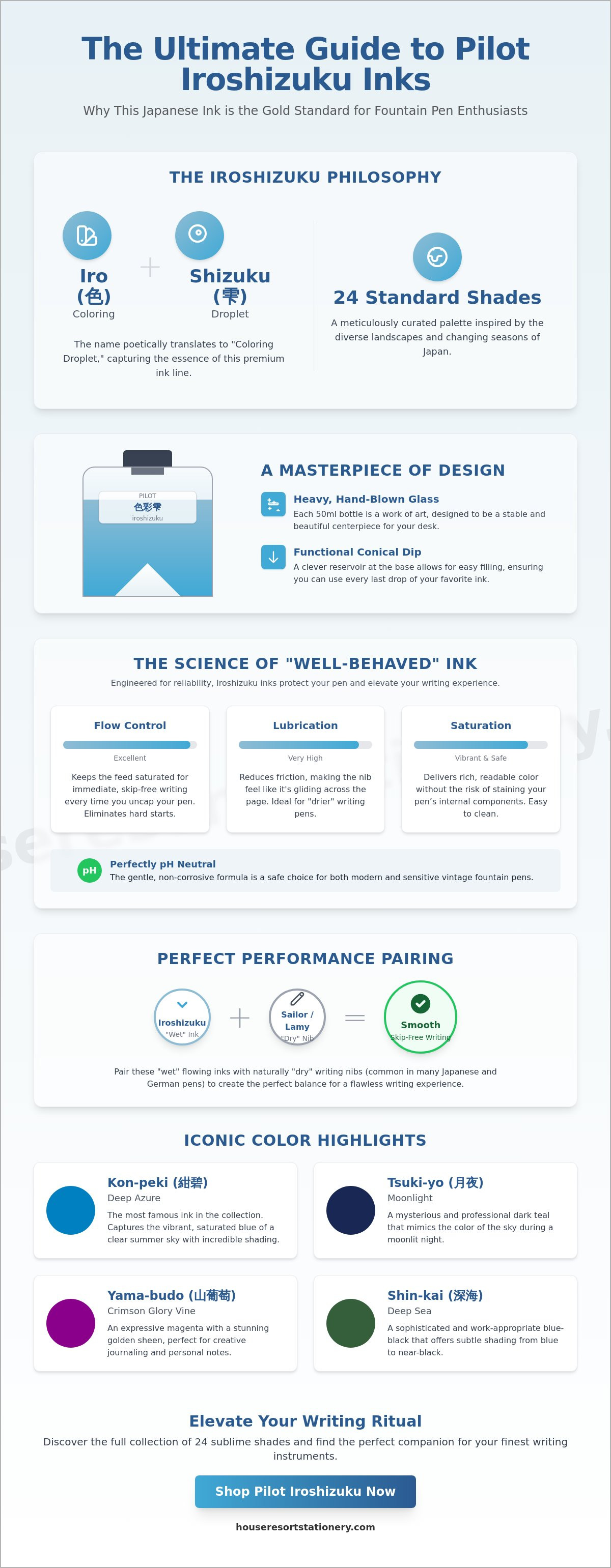
The name Iroshizuku is a poetic combination of the Japanese words "iro" (coloring) and "shizuku" (droplet), perfectly capturing the essence of this premium line. Since its introduction, pilot iroshizuku has become the benchmark by which all other boutique inks are measured. It's a collection of 24 nature-inspired shades that represent the diverse landscapes and seasons of Japan. Collectors often find themselves returning to these bottles because they offer a level of consistency and reliability that is rare in the world of luxury stationery.
The 50ml bottle is a masterpiece of Japanese industrial design. Each one is crafted from heavy, hand-blown glass and features a clever, conical "dip" at the base. This tiny reservoir allows you to fill your pen easily even when the ink level is low, ensuring you don't waste a single drop of your favorite shade. Beyond the aesthetics, the chemical composition is engineered for safety. These inks are pH neutral, making them a secure choice for both modern pens and sensitive vintage models that require a gentle touch.
The Legacy of Pilot Ink Craftsmanship
Pilot has been manufacturing its own fluids since 1918, giving the brand over a century of technical expertise. While many modern brands outsource their production to third-party chemical plants, Pilot maintains complete control over its secret formulations. This internal mastery is the same foundation that supports their luxury Namiki maki-e pens, where only the highest quality components are acceptable. The Iroshizuku philosophy represents a meticulous marriage of chemical precision and poetic naturalism.
Why 'Well-Behaved' Ink is a Professional Necessity
In the enthusiast community, "well-behaved" is a specific term of endearment. It refers to an ink that flows consistently without causing "hard starts" or skipping during a meeting. While many fountain pen inks can be temperamental or prone to clogging, pilot iroshizuku provides excellent lubrication. This makes the nib feel like it's gliding across the page, even if the pen itself is naturally a bit "dry."
Performance on paper is where the brand truly excels. You can expect minimal feathering and bleed-through, especially when using high-quality Japanese stationery like Midori or Tomoe River. The formula is designed to be low-maintenance and easy to clean, which is essential for anyone who rotates through different colors frequently.
- Flow Control: Keeps the feed saturated for immediate writing every time you uncapped the pen.
- Lubrication: Reduces friction between the nib and paper fibers for a smoother feel.
- Saturation: Delivers vibrant, readable colors without the risk of staining your pen’s internal components.
Exploring the 24 Sublime Shades: A Palette Inspired by Japanese Nature
The 24 colors in the pilot iroshizuku collection act as a poetic map of Japan’s natural heritage. Rather than relying on technical color codes, Pilot organizes this line by the four seasons. This approach allows you to select an ink that captures the mood of a specific month or landscape. For example, the spring colors often lean toward delicate florals and fresh greens, while the winter selection features deep, contemplative teals and grays. This cultural connection transforms a simple writing fluid into a sensory bridge to the Japanese outdoors.
The allure of these inks lies in their multi-dimensional appearance on the page. You'll often hear enthusiasts discuss "shading," which is the beautiful transition from light to dark within a single stroke. Many of these shades also exhibit "sheen," a metallic surface effect that appears as the ink dries on less absorbent paper. If a 50ml bottle feels like a significant commitment, the 15ml mini sets allow you to curate a personal flight of colors to test on different paper stocks before choosing a permanent favorite.
The Blues and Teals: From Deep Sea to Summer Skies
The blue spectrum is where this line truly shines. Kon-peki, or "Deep Azure," is arguably the most famous ink in the community. It captures the vibrant, saturated blue of a clear summer sky and is prized for its incredible shading properties. In contrast, Tsuki-yo (Moonlight) offers a more mysterious atmosphere. It mimics the dark teal of a night sky reflected in a lake; it often reveals a surprising red sheen on high-quality paper. For those who prefer a professional look, Shin-kai (Deep Sea) provides a sophisticated blue-black alternative that stays legible while offering more character than a standard cartridge.
The Vibrant Pinks, Purples, and Greens
Moving away from blues, Yama-budo (Wild Grape) is a legendary ink that every collector should try. It is a rich, wine-colored magenta that often displays a striking gold sheen, making it one of the most expressive colors in the catalog. Shin-ryoku (Forest Green) offers a different kind of intensity. It captures the deep, lush green of Japanese foliage during the peak of summer, providing a refreshing break from traditional colors. Murasaki-shikibu (Japanese Beauty Berry) is inspired by the small, purple berries of the Callicarpa japonica plant. It is also a nod to the famous 11th-century novelist, offering a sophisticated violet that feels both historic and modern. If you're ready to add these storied colors to your desk, you can explore our curated selection of Japanese inks to find your perfect match.
Technical Performance: Matching Your Ink to Your Nib and Paper
The mechanical partnership between a fountain pen and its ink determines the quality of every stroke. In the stationery community, pilot iroshizuku is prized for being a "wet" ink, which refers to its generous flow rate through the pen's feed. This characteristic makes it a perfect match for "dry" pens like the Lamy Safari or the Sailor Pro Gear. These instruments can sometimes feel scratchy or hesitant with drier fluids, but the high lubrication of the Iroshizuku line ensures the nib glides effortlessly across the paper without skipping.
Nibs on the opposite end of the spectrum, such as Extra Fine (EF) points, benefit from this formulation's high color saturation. While many boutique inks look washed out when squeezed through a needle-thin tip, these Japanese inks maintain their legibility and rich hue. If you prefer Broad, Stub, or Flex nibs, the wet flow allows for a "halo" effect. This occurs when the ink pools at the edges of a letter, creating a darker outline that emphasizes the depth of the color. Performance is also heavily dictated by your choice of paper. On coated, non-absorbent surfaces like Rhodia, the ink sits on top of the fibers to maximize shading. On standard 20lb office paper, however, the wet nature of pilot iroshizuku may cause slight feathering or bleed-through, making premium stationery a worthwhile investment for the best results.
Iroshizuku Nib-to-Paper Compatibility Matrix
| Nib Size | Flow Rating | Shading Potential | Best Use Case |
|---|---|---|---|
| Extra Fine (EF) | High | Low | Detailed planners and small handwriting. |
| Medium (M) | High | Moderate | Daily journaling and professional notes. |
| Broad / Stub | Very High | Maximum | Showcasing sheen and artistic shading. |
Left-handed writers should be mindful of dry times. Because these inks are wetter than average, they may take 15 to 20 seconds to dry completely on non-absorbent paper. Using a blotter sheet or choosing a slightly more absorbent paper can help prevent smudging during long writing sessions.
Cleaning and Maintenance Protocols
Proper maintenance ensures your pens last for decades. We recommend the 30-day rule: flush your fountain pen with room-temperature water every month to prevent any buildup from evaporation. Because Iroshizuku is a dye-based, highly soluble formula, it is one of the easiest inks to clean out of a converter or piston-fill system. It doesn't contain the stubborn particles found in shimmering or pigment-based inks. This high solubility and gentle pH balance make Iroshizuku the safest choice for vintage celluloid pens that are susceptible to staining or internal corrosion.
Choosing Your First Bottle: Essential Colors for Every Writing Style
Selecting your first bottle of pilot iroshizuku is a rite of passage for enthusiasts. With 24 standard shades available, the choice usually reflects your primary writing environment. While we previously discussed the technical "wetness" and seasonal inspirations, this guide focuses on practical application. A balanced collection starts with a "Core Trio": one professional workhorse, one creative daily driver, and one vibrant statement color. This strategy ensures you're prepared for every scenario, from signing legal documents to personal journaling.
For creative reflection, the Journaler’s Palette offers expressive options like Yama-budo (Wild Grape) and Syo-ro (Dew on Pine). These inks don't just sit on the paper; they interact with it. Syo-ro is particularly fascinating because it often goes on the page as a bright teal and dries into a sophisticated forest green. This color shift adds a layer of quiet drama to your daily entries. Artists also value these inks for watercolor-style techniques. Because the formula is dye-based, it reacts beautifully with water. You can create soft washes and gradients that reveal the hidden undertones of the pigment, making your sketches look multi-dimensional.
The Workhorse Inks: Office-Safe and Elegant
In professional settings, legibility is essential. Take-sumi (Bamboo Charcoal) provides a deep, saturated black that mimics the richness of traditional sumi-e ink. It offers more visual interest than standard cartridges, showing subtle charcoal shading in broader nibs. If you need a blue that stands out on white paper, Asa-gao (Morning Glory) is a vibrant royal blue that commands attention. It's clean, authoritative, and dries relatively quickly on standard office paper. For those who prefer a more modern, understated look, Fuyu-syogun (Old Man Winter) is a cool-toned grey. It mimics the soft light of a Japanese winter rain, providing a sophisticated alternative to standard blacks or blues.
The Statement Inks: For Personal Correspondence
Personal letters deserve a hue that reflects your personality. Momiji (Autumn Leaves) is a bright, energetic red that captures the transition of Japanese maples in October. It's a bold choice for headers or special notes. For a softer, organic touch, Chiku-rin (Bamboo Forest) provides a refreshing light green that feels calming on the page. Kosumosu (Cosmos) is a playful pink inspired by the fall-blooming flowers of the same name. It's the perfect choice for celebratory cards or notes to friends. These colors allow you to break away from the mundane and turn every letter into a gift. To find your ideal starting palette, BUY Pilot Iroshizuku ink bottles at our curated boutique.
Elevate Your Writing Ritual with HouseResort Stationery’s Curated Pilot Collection
Choosing pilot iroshizuku is an investment in your daily writing ritual. At HouseResort Stationery, we act as your boutique curator, filtering the market to present only the finest analog tools. Buying from an authorized retailer ensures you receive authentic, fresh ink stored in climate-controlled environments. This prevents the evaporation or sediment issues that can plague older stock from unauthorized sources. Our collection is more than a simple catalog; it's a shared passion for the tactile nature of quality paper and pens. We treat every bottle as a piece of heritage craftsmanship that deserves a place on your desk.
Pairing your ink with the right instrument is essential for a frictionless experience. A high-flow ink demands a pen that can keep pace with its generous lubrication. We often recommend matching these vibrant Japanese shades with a Sailor fountain pen or a Kaweco Brass Sport. These combinations turn a simple task into a luxury indulgence. Our team provides expert support and community-oriented video content to help you master these tools. Whether you're a seasoned collector or a newcomer, we guide you through the technical nuances of nib-to-paper compatibility to ensure your writing remains a relaxing, enjoyable escape.
The Perfect Pair: Matching Ink to Your Next Journal
Midori MD paper is the perfect canvas for Iroshizuku’s shading. Its unique texture allows the "coloring droplets" to settle and reveal their hidden depth without immediate absorption. This creates the beautiful transitions and "halo" effects that enthusiasts crave. For those who prefer a nomadic lifestyle, using pilot iroshizuku in a Traveler's Notebook is ideal for on-the-go sketching. The leather cover and specialized refills create a durable home for your creative reflections. You can explore our deep dive into the Midori MD Notebook Journal: The Peak of Japanese Paper to learn why this specific paper brand is the gold standard for ink testing.
Start Your Collection Today
The iconic 50ml bottle is designed to be a permanent desk centerpiece. Its heavy glass and elegant silhouette reflect the precision of the fluid inside. We invite you to visit our YouTube channel for our "Looking For Gift Ideas" series, where we feature Pilot inks alongside brass sharpeners, pencil boards, and leather covers to help you build the ultimate writing set. Our goal is to make your shopping experience as frictionless as the ink itself. 🎁
Find Your Perfect Shade and Transform Your Desk
Every stroke should be an intentional act of craftsmanship. You now understand why these inks are the gold standard for enthusiasts. From the technical "wet" flow that protects your vintage pens to the 24 shades inspired by Japanese landscapes, pilot iroshizuku offers a writing experience that utility inks simply can't match. You've learned how to pair these colors with the right nibs and paper to maximize shading and sheen. This knowledge allows you to move beyond basic utility into a world of curated analog expression.
As an authorized Pilot retailer, HouseResort Stationery provides the expert support you need to build a meaningful collection. We ensure every bottle is fresh and authentic, helping you find the perfect match for your Midori MD journal or Traveler's Notebook. It's time to embrace a more expressive writing ritual that reflects your personal style. BUY PILOT IROSHIZUKU BOTTLED INK and discover how a single droplet of color can redefine your daily notes. Your next favorite bottle is waiting to become the centerpiece of your desk. 🎁
Frequently Asked Questions
Is Pilot Iroshizuku ink waterproof or archival?
No, these inks are not waterproof or archival. They are dye-based fluids designed for high solubility, which makes them easy to clean but susceptible to smudging if they get wet. For permanent legal documents or records that must last for decades, you should consider a dedicated pigment-based or iron-gall ink instead.
Can I use Pilot Iroshizuku ink in fountain pens from other brands like Lamy or Montblanc?
Yes, you can safely use these inks in any modern or vintage fountain pen regardless of the manufacturer. They are engineered with a safe pH balance and excellent lubrication that often improves the writing feel of "dry" pens. Many collectors specifically choose this line to help their European pens glide more smoothly across the page.
What is the most popular Pilot Iroshizuku color for beginners?
Kon-peki (Deep Azure) is the most popular choice for those starting their collection. It provides a vibrant, saturated blue that works well in professional settings while showing off the line's famous shading properties. Yama-budo (Wild Grape) is another top contender for beginners who want a more expressive, wine-colored ink with a unique gold sheen.
How long does a 50ml bottle of Pilot Iroshizuku typically last?
A 50ml bottle of pilot iroshizuku usually provides between 80 and 100 full refills for a standard converter. For a person who writes several pages a day, one bottle can easily last for six to twelve months. Your actual usage will depend on your nib size; a broad nib consumes ink significantly faster than an extra-fine point.
Does Pilot Iroshizuku ink stain fountain pen demonstrators or converters?
No, this ink is highly regarded for its non-staining properties and is very easy to rinse out. Because the formula doesn't rely on permanent pigments or heavy shimmering particles, it won't leave a residue on the walls of clear "demonstrator" pens. A simple flush with room-temperature water is usually enough to return your pen to a pristine state.
What is the difference between Pilot Iroshizuku and Pilot Namiki ink?
Pilot Namiki represents the brand's standard, utilitarian line available in basic blue, black, and blue-black. In contrast, pilot iroshizuku is a premium boutique collection featuring 24 nature-inspired shades and superior glass packaging. The Iroshizuku formula offers better lubrication and more complex shading than the standard Namiki cartridges or bottles.
Why is Pilot Iroshizuku more expensive than other fountain pen inks?
The premium price reflects the in-house manufacturing process and the high-quality ingredients used to ensure pen safety. Pilot also invests heavily in the packaging; each 50ml bottle is made of heavy, hand-blown glass with a custom conical base for easy filling. This level of industrial design and chemical precision justifies its status as a luxury stationery staple.
Can I mix different Pilot Iroshizuku colors together?
We don't recommend mixing these colors unless you're prepared for potential chemical reactions. While they belong to the same product line, different dyes can sometimes interact to create sediment that might clog your pen's feed. If you want to experiment with custom colors, it's best to do so in a separate vial and let the mixture sit for 24 hours to check for any precipitates before inking your pen.