
The Connoisseur’s Guide: How to Properly Clean a Fountain Pen in 2026
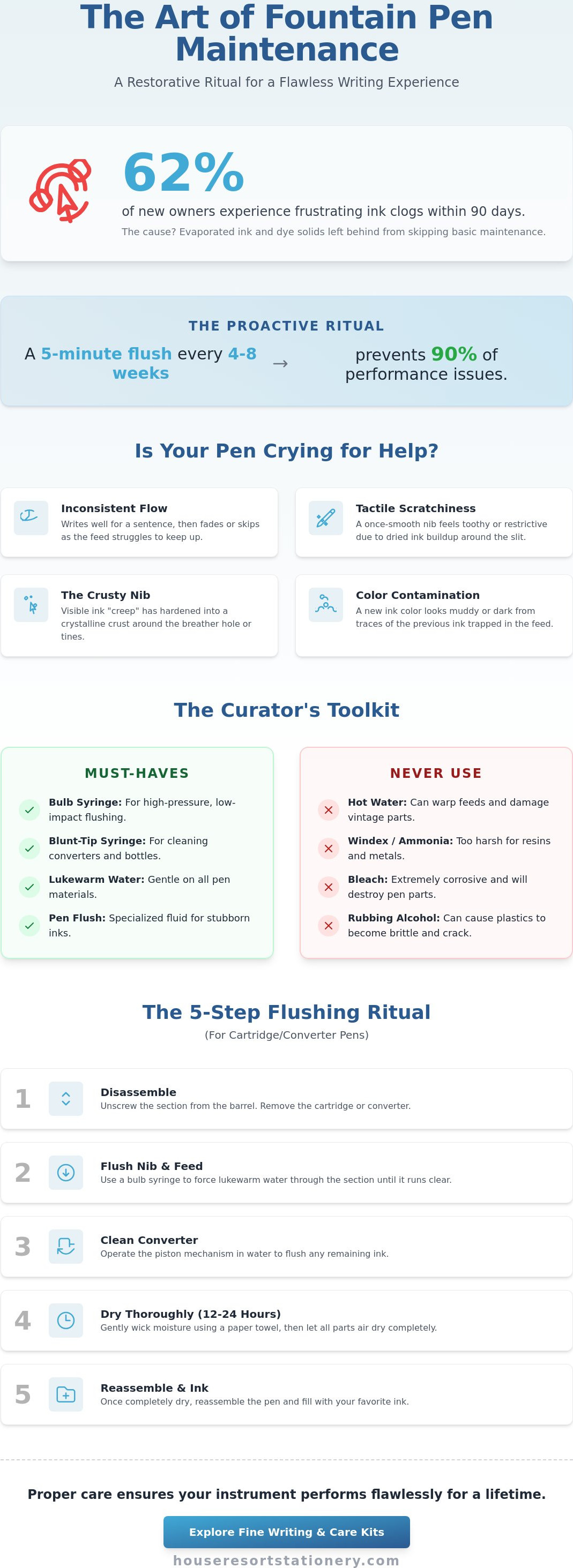
Did you know that over 62% of new fountain pen owners experience their first frustrating ink clog within just 90 days? This common issue usually stems from skipping basic routine maintenance. You likely value the tactile connection of a fine nib on paper; therefore, a skipping stroke or a dry start feels like a significant setback. Learning how to properly clean a fountain pen is not a tedious chore. Instead, it's a restorative ritual that preserves the heritage and performance of your writing collection for years to come.
It's natural to feel a sense of caution when handling luxury resins or intricate filling systems. You want your pen to write with its original smoothness without risking damage to the internal mechanisms. This guide provides the clarity and confidence you need to handle your instruments with professional care. We'll explore the essential tools required, the ideal cleaning frequency, and the specific techniques to ensure your fine writing tools perform flawlessly for a lifetime.
Key Takeaways
- Understand the mechanics of ink evaporation and how a regular cleaning ritual ensures consistent capillary action and prevents hard starts.
- Discover how to properly clean a fountain pen using professional tools like the bulb syringe for high-pressure, low-impact flushing.
- Master the distinct maintenance requirements for different mechanisms, including standard cartridge-converters and integrated piston or vacuum filling systems.
- Learn the "wicking method" for moisture removal and why a 12-24 hour drying period is essential for the longevity of your instrument.
- Build the confidence to handle luxury materials and heritage components without the risk of staining or damaging the pen’s internal feed.
The Importance of a Regular Fountain Pen Cleaning Ritual
Maintaining a fine writing instrument is an act of stewardship. For the enthusiast, understanding how to properly clean a fountain pen is the difference between a tool that lasts a season and one that serves for a lifetime. Modern inks are complex chemical cocktails. When water evaporates from the nib and feed, it leaves behind concentrated dye solids and surfactants. This residue is the primary enemy of consistent capillary action. Without a regular flush, these microscopic blockages restrict ink flow, leading to the frustrating "hard start" where the pen refuses to write upon contact with the paper.
Different fountain pen filling mechanisms influence how you approach maintenance, but the core objective remains the same. You must clear the feed channels before old ink turns into a stubborn, semi-solid mass. Establishing a cadence is essential for ink hygiene. A simple five-minute flush every four to eight weeks prevents 90% of all clog-related performance issues. This proactive care preserves the heritage of your collection and protects luxury materials from the long-term degradation caused by acidic or highly saturated ink deposits.
Understanding Ink Behavior in the Feed
The feed is a marvel of precision engineering. It utilizes narrow channels to regulate the flow of ink and air. When you leave a pen unused, the water component of the ink slowly vanishes. This process concentrates the dye particles. In 2026, the rise of "sheening" and shimmer inks has made this even more critical. These inks contain high concentrations of particulates that can settle into the feed's deeper grooves. If these particles dry completely, they create a physical barrier that lukewarm water alone might struggle to penetrate. Regular flushing keeps these particles in suspension and prevents them from nesting in the feed.
Signs Your Pen Needs Immediate Attention
Your pen will often signal its distress before it fails completely. Look for these specific indicators that a cleaning is overdue:
- Inconsistent Flow: The pen writes well for a sentence but then begins to fade or skip.
- Tactile Scratchiness: A nib that usually glides suddenly feels toothy or restrictive due to dried buildup around the slit.
- The Crusty Nib: Visible "nib creep" that has hardened into a colorful, crystalline crust around the breather hole or tines.
- Color Contamination: Your new blue ink looks muddy because traces of a previous black or red ink remain trapped in the collector.
Addressing these signs immediately prevents the need for more aggressive deep cleaning methods later. A clean pen isn't just about functionality; it's about the pure, tactile joy of a flawless writing experience.
Essential Tools for a Professional Cleaning Kit
A master's results depend on the quality of their tools. To understand how to properly clean a fountain pen, you must first assemble a kit that respects the delicate engineering of the instrument. High-quality maintenance doesn't require expensive machinery. It requires a curated selection of simple, effective items designed to protect luxury materials while ensuring peak performance.
The most important tool in your arsenal is the bulb syringe. Often found in the infant care aisle, a 2-ounce or 3-ounce rubber bulb is the secret to high-pressure, low-impact flushing. It allows you to force water through the feed and nib with more volume and consistency than a standard converter ever could. This method clears stubborn ink deposits from the internal fins without subjecting the pen to mechanical stress. Pair this with a blunt-tip syringe, which is indispensable for deep-cleaning converters and reaching the bottom of ink bottles without creating a mess.
Water choice is equally critical. Room temperature or lukewarm water is non-negotiable. Hot water is a significant risk; it can warp plastic feeds, soften adhesives, or damage vintage ebonite and celluloid components. For most routine cleanings, plain water is sufficient. However, for stubborn pigments or shimmer inks, a specialized pen flush is beneficial. These solutions contain gentle surfactants that break down ink bonds more effectively than water alone. If you are preparing to store your instrument or switch between high-contrast colors, these solutions ensure no trace of the previous ink remains. You can find these essentials alongside our collection of fine fountain pens and journals to keep your writing experience pristine.
The Amateur vs. The Curator Toolkit
Curators avoid household shortcuts that compromise the pen's integrity. Never use Windex, bleach, or rubbing alcohol. These chemicals are too aggressive for the resins and metals used in fine writing instruments; they can cause clouding, cracking, or permanent discoloration. Instead of abrasive paper towels, which can leave micro-scratches on polished barrels, use soft, lint-free microfiber cloths. For external barrel care, a soft-bristled brush helps remove dust or ink from the threading without marring the finish.
Setting Up Your Maintenance Station
Organization prevents accidents. Choose a flat, stable surface away from electronics or porous fabrics. Lay down a padded silicone mat or a thick towel to protect delicate resin bodies from hard surfaces. Use the two-cup method for efficiency. One cup holds clean water for the final rinse, while the other catches the initial, ink-heavy flush. This setup keeps your workspace tidy and ensures you aren't re-introducing ink particles into the pen during the cleaning process.
Step-by-Step Guide to Cleaning a Cartridge-Converter Pen
Mastering how to properly clean a fountain pen begins with a systematic disassembly. Most modern instruments utilize a cartridge-converter system, which is prized for its ease of maintenance. Start by unscrewing the barrel from the grip section. Carefully remove the ink cartridge or converter. If you're using a converter, set it aside for separate cleaning. This breakdown allows you to access the feed and nib directly, ensuring no hidden ink deposits remain trapped in the housing. Always handle these components over your padded maintenance station to prevent any accidental drops on hard surfaces.
Don't neglect the converter during this process. Ink often clings to the piston seal or the narrow mouth of the reservoir. Fill the converter with room temperature water and move the piston up and down repeatedly. This action creates the necessary turbulence to dislodge stubborn pigments. If you notice ink trapped behind the piston seal, a blunt-tip syringe becomes your best ally. It allows you to direct a precise stream of water into the back of the converter, ensuring every millimeter is pristine before you re-ink your pen.
Flushing the Nib and Feed
The grip section contains the most intricate parts of your pen. To begin the primary flush, insert the nozzle of your bulb syringe into the back of the grip section where the converter usually sits. Ensure a tight seal to maximize pressure. Squeeze the bulb to pulse water through the feed and out of the nib. As you pulse the water, the dark, saturated plumes of ink slowly dissipate until the stream running from the nib is as transparent as the water in your rinse cup. This visual transition is the definitive sign that your feed channels are clear and ready for a new color palette.
Addressing the Cap and Barrel
Cap hygiene is a frequently overlooked aspect of maintenance. "Phantom leaks" often occur when ink spray collects in the inner cap due to temperature changes or movement. Use a damp cotton swab to gently wipe the interior of the cap. You might be surprised by the amount of residue that has accumulated there. Similarly, inspect the barrel threads and the section threads. Dried ink in these grooves can cause the pen to feel gritty when closing or, in extreme cases, lead to staining on your fingers. Use a soft, lint-free cloth to dry the exterior of the barrel and cap immediately. This prevents water spots from marring the finish of luxury resins or precious metal trims. Understanding how to properly clean a fountain pen means treating every component with the same level of meticulous care.
Advanced Care for Piston and Vacuum Filling Systems
Integrated filling systems represent the pinnacle of ink capacity and engineering. Unlike the modular cartridge-converter systems discussed earlier, these instruments utilize the entire barrel as an ink reservoir. Understanding how to properly clean a fountain pen with these complex mechanisms requires a departure from the bulb syringe method. Because you cannot easily remove the feed from the reservoir, you must rely on the pen's own internal hardware to facilitate a thorough flush. This process is more time-intensive, but it's essential for preserving the seals and ensuring the longevity of the internal components.
The cycle method is your primary technique here. By repeatedly drawing clean water into the barrel and expelling it, you create the turbulence necessary to lift ink from the reservoir walls and the feed. This mechanical action is highly effective, yet it demands patience. You might need to repeat this cycle twenty times or more to achieve total clarity. If you are looking to expand your inventory with these sophisticated mechanisms, explore our fine fountain pen collection for instruments that blend heritage with modern performance.
Flushing Piston Fillers
Piston fillers operate via a screw-driven plunger that moves along the interior of the barrel. To clean these, submerge the nib in clean water and slowly twist the piston knob to draw fluid upward. Expel the water and observe the saturation. If the piston begins to feel tight or provides resistance, the internal seal likely needs lubrication. You can identify a drying seal if the movement feels jerky rather than smooth. Pay close attention to the "dead space" behind the piston head. Ink can sometimes migrate past a worn seal; if you see color in this area, the pen requires professional servicing or a carefully applied drop of 100% pure silicone grease to the piston threads.
Vacuum Filler Specifics
Vacuum fillers utilize a high-pressure release to draw ink into the barrel in a single stroke. This mechanism is efficient but requires a steady hand during cleaning. When you push the plunger down, the pressure change forces water through the feed at high velocity. Ensure your rinse container is deep enough to catch the spray. Maintain the rod and seals by ensuring no abrasive ink particles, such as those found in some iron-gall or shimmer inks, remain trapped against the plunger. While soaking the nib and section can help soften dried ink, mechanical flushing remains the superior method for integrated pens. It ensures that the internal rod and seals are fully rinsed, preventing the buildup of gunk that can lead to permanent staining or mechanical failure.
Avoid the temptation of over-disassembly. Many modern piston and vacuum fillers include wrenches for complete breakdown, but frequent disassembly increases the risk of stripping threads or cracking the barrel. It can also void your manufacturer's warranty. Stick to the cycle method for routine maintenance and only resort to a full teardown when a deep clog persists after multiple days of soaking. Proper stewardship means knowing when to trust the mechanism and when to seek an expert's touch.
Drying, Reassembly, and Post-Cleaning Care
The ritual concludes not with the final rinse, but with the patient removal of moisture. Even after the water runs clear, microscopic droplets remain trapped within the feed's fins and the collector's narrow channels. Mastering how to properly clean a fountain pen requires a commitment to the drying phase. If you re-ink a damp pen, the remaining water will dilute your ink, leading to inconsistent saturation and a disappointing, watery line. This final stage of stewardship ensures your instrument returns to its peak performance without compromise.
The wicking method is the most effective way to ensure total dryness. Wrap the nib and grip section in a soft, lint-free microfiber cloth or a high-quality paper towel. Place the assembly nib-down in a small container. Gravity naturally pulls the residual water out of the feed and into the absorbent material. This process is far safer than mechanical shaking, which can lead to accidental nib damage. Allow your pen to air-dry for 12 to 24 hours. This duration is essential for complex integrated filling systems where moisture can hide behind piston seals or within vacuum rods.
Safe Drying Techniques
Protecting the nib tip is paramount during the drying phase. Create a "drying cup" by placing a small piece of soft padding at the bottom of a glass to cushion the iridium point. Never use a hairdryer or any external heat source to accelerate the process. High temperatures can warp ebonite feeds, soften internal adhesives, or cause luxury resin barrels to crack. Moisture in the cap also requires attention. Use a dry cotton swab to reach the deep interior of the cap. Trapped humidity can lead to nib corrosion over time or cause "phantom leaks" when you eventually cap the pen.
Re-inking Your Collection
Reassembly offers a perfect moment for a technical inspection. Ensure the nib is centered on the feed and that the section threads are clean. When you are ready to write again, choose a "well-behaved" ink to verify the pen's health. We recommend starting with Pilot Iroshizuku Bottled Ink due to its excellent flow characteristics and gentle formulation. This choice helps you confirm that the capillary action is fully restored without the interference of heavy pigments or shimmers.
Perform the "First Stroke" test to validate your work. A properly cleaned pen should write immediately upon contact with the paper. If the flow feels restricted, trace slow figure-eights or try fountain pen doodle journaling to encourage the ink through the newly cleared channels. This creative exercise serves as a functional diagnostic tool. It allows you to observe the ink's shading and consistency across different stroke angles. Understanding how to properly clean a fountain pen transforms maintenance from a task into a rewarding part of the writing experience.
Elevate Your Writing Experience Through Stewardship
A well-maintained pen is a companion for life. By mastering the nuances of a regular flushing ritual and selecting the correct tools, you ensure that your finest nibs continue to glide across the page with effortless precision. You now have a clear understanding of how to properly clean a fountain pen, from the high-pressure flush of a bulb syringe to the meticulous cycle method required for integrated piston systems. These small investments in time prevent the common clogs that affect 62% of new owners within their first 90 days of use.
As an authorized retailer of world-class manufacturers, we provide the specialized knowledge needed to care for luxury writing instruments. Whether you're seeking a new heritage piece or the perfect ink for your next entry, we offer nationwide shipping for enthusiasts across the United States. Explore our curated collection of fine fountain pens and accessories to find your next favorite tool. Your writing journey deserves the finest materials and the confidence to maintain them flawlessly.
Frequently Asked Questions
How often should I clean my fountain pen if I use it daily?
You should clean your pen every 4 to 8 weeks with daily use. This frequency prevents dye solids from accumulating in the feed and ensures consistent flow. If you use permanent or shimmer inks, increase this maintenance to every 2 weeks. Consistent care ensures your instrument remains ready for immediate use. It's much easier to perform a quick monthly flush than to revive a neglected pen.
Can I use tap water to clean my fountain pen, or do I need distilled water?
Tap water is sufficient for most cleanings unless your local supply contains high mineral levels. Hard water can leave calcium deposits on the nib or within the internal feed channels over time. If you own high-value heritage pieces, using distilled water provides an extra layer of protection. This simple precaution ensures that no external contaminants interfere with the delicate capillary action of your fine writing instrument.
What should I do if the ink has completely dried inside the nib?
Submerge the nib and grip section in lukewarm water for at least 12 hours if ink has dried completely. You'll likely see plumes of color slowly leaching into the water. If plain water fails, use a specialized pen flush to break down the hardened dye particles. Learning how to properly clean a fountain pen with a stubborn clog requires patience; rushing the process can lead to mechanical damage.
Is it safe to use an ultrasonic cleaner for all fountain pens?
Ultrasonic cleaners are excellent for metal nibs and plastic feeds but carry risks for specific materials. Avoid using them for vintage celluloid, ebonite, or pens with delicate gold plating, as the vibrations can cause flaking or structural failure. If you use one, only submerge the nib and section. Never place the entire barrel in the tank. This targeted approach protects the aesthetic finish of your luxury instrument.
Can I switch ink colors without a full cleaning of the pen?
You shouldn't switch ink colors without a thorough cleaning. Mixing different ink formulations can cause a chemical reaction that creates a sludge-like consistency in the feed. This residue quickly leads to clogs and flow issues. A full flush ensures the new color remains pure and vibrant. Taking the time to understand how to properly clean a fountain pen before re-inking preserves the visual integrity of your writing.
Why does my pen still write with the old color after I flushed it?
Residual ink is likely trapped deep within the collector's fins or the back of the feed. Even after the water appears clear, a small amount of concentrated dye can remain. The wicking method helps pull these final traces out. Use a bulb syringe to pulse water more aggressively through the section. This ensures that no hidden deposits contaminate your next fill of premium ink.
Is dish soap safe to use for cleaning a fountain pen?
A single drop of mild, additive-free dish soap in a cup of water is safe for stubborn clogs. The soap acts as a surfactant to break down oils and dried ink bonds. Avoid soaps with heavy fragrances, moisturizers, or anti-bacterial agents. These additives can leave a film on the feed that actually repels ink. Always follow a soapy wash with multiple rinses of clean, lukewarm water.
How do I clean the inside of the pen cap?
Use a damp cotton swab to gently wipe the interior of the cap. Ink spray often collects in the inner cap due to movement or pressure changes. If the buildup is significant, you can briefly fill the cap with water, shake it gently, and then dry it thoroughly with a soft cloth. Ensuring the cap is dry prevents moisture from causing corrosion on the nib or furniture.