
The Midori MD Notebook Journal: A Connoisseur’s Guide to Japanese Paper Excellence
What if the most sophisticated tool in your stationery collection isn't the pen itself, but the paper that receives it? For many enthusiasts, the search for a midori md notebook journal begins with the realization that not all paper is created equal. You've likely felt the frustration of watching a premium ink bleed through a page or struggling with a binding that won't stay flat on your desk. These technical distractions pull you away from the meditative flow of writing.
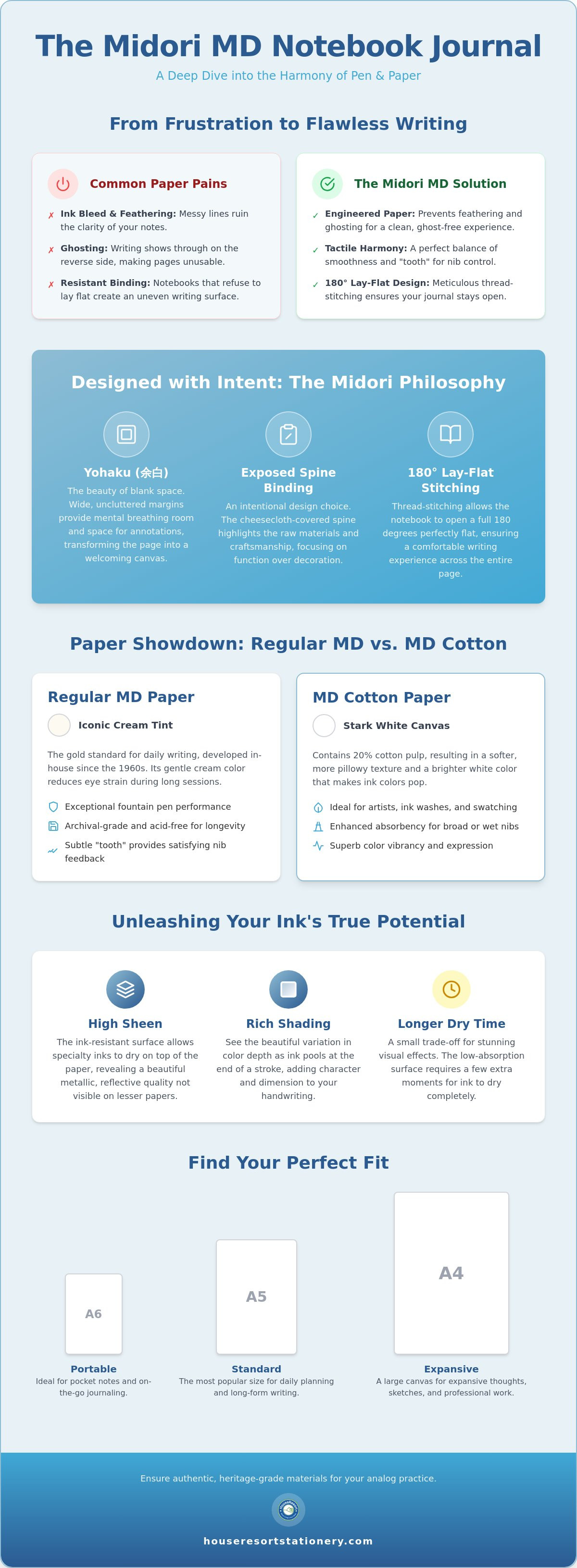
The MD series solves these common pains by stripping away the clutter and focusing entirely on the tactile harmony between nib and page. In this guide, you'll learn why this Japanese heritage brand is the definitive choice for a ghost-free writing experience. We'll break down the nuances of the MD paper series, from the standard minimalist layouts to the unique texture of MD Cotton. By the end, you'll understand how to select the ideal format to turn your daily notes into a professional, sensory ritual.
Key Takeaways
- Understand the technical engineering behind MD Paper that prevents feathering while maintaining a pleasurable "tooth" for your nib.
- Identify the specific midori md notebook journal layout and size that aligns with your workflow, from portable A6 pocket sizes to expansive A4 variants.
- Discover how to protect the signature exposed cheesecloth spine and allow your notebook to develop a unique personal patina over time.
- Learn why sourcing from an authorized boutique curator like HouseResort Stationery ensures you receive authentic, heritage-grade materials for your analog practice.
What is the Midori MD Notebook Journal?
The Midori MD Notebook Journal is more than a simple bound stack of paper. It represents a heritage of Japanese craftsmanship that dates back to 1960. The "MD" stands for Midori Diary, a name that signifies the brand’s original focus on creating paper specifically for personal reflection and daily recording. Unlike mass-produced alternatives, this paper was developed in-house to achieve a specific level of "writing comfort." This isn't a marketing buzzword; it's a technical standard that balances smoothness with the necessary resistance for a fountain pen nib.
The first thing you'll notice about the notebook is its striking lack of a traditional hard cover. Midori intentionally leaves the spine exposed, covered only by a thin layer of cheesecloth. This design choice highlights the beauty of the materials themselves. It feels like a professional tool rather than a decorative accessory. This raw aesthetic is deeply rooted in the concept of traditional Japanese paper and the appreciation for functional simplicity. By removing the heavy outer shell, the brand encourages you to focus on the act of writing rather than the prestige of the vessel.
The Philosophy of Yohaku
The term "yohaku" refers to the intentional use of blank space. In a midori md notebook journal, this philosophy manifests in wide margins and a clean, uncluttered layout. This isn't wasted space. It's mental breathing room. These margins allow you to add dates, titles, or small sketches without encroaching on your primary text. It reduces visual noise and helps you focus on your thoughts. The design invites you to participate in the creation of the page. It’s a psychological shift that transforms a blank page from an intimidating void into a welcoming canvas for creativity.
The Iconic 180-Degree Flat-Opening Binding
A common pain for journalers is a notebook that refuses to stay open. Midori addresses this through a meticulous thread-stitched binding process. Each section of the notebook is sewn together, allowing it to open a full 180 degrees. You won't find glued bindings here that crack over time or snap shut while you're mid-sentence. This lay-flat design is essential for long-form writing. It ensures that your hand can move comfortably across the entire width of the page, from the outer edge to the very center of the spine. It's a hallmark of durability and thoughtful engineering that makes the midori md notebook journal a reliable partner for years of use.
The Science of MD Paper: Why Fountain Pen Users Choose It
The soul of the midori md notebook journal lies in its proprietary paper, a material developed and refined in Japan since the 1960s. While many premium stationery brands chase a glass-like smoothness, Midori focuses on a deliberate "tooth." This subtle texture provides a light resistance against the nib. It ensures your pen doesn't slide uncontrollably across the page. This feedback is essential for writers who value precision and a tactile connection to their thoughts. It makes the act of writing feel intentional and grounded.
Technical performance is where this paper truly shines for the enthusiast. It's engineered to be incredibly ink-resistant. You can use broad nibs or wet inks without worrying about feathering, where the ink spreads into the paper fibers, or ghosting, where the writing shows through on the reverse side. The paper is also acid-free and archival-grade. This means your journals won't yellow or become brittle over decades. The characteristic cream tint isn't just an aesthetic choice; it's designed to reduce eye strain by reflecting less harsh light during long, late-night writing sessions.
Regular MD Paper vs. MD Cotton
Choosing between the two primary paper types depends on your specific tools. The standard midori md notebook journal uses the classic cream paper, which is the gold standard for daily writing. However, the MD Cotton variant introduces 20% cotton pulp into the mix. This change results in a softer, more pillowy texture and a starker white color. Cotton fibers are naturally more absorbent, making this version ideal for artists who use light ink washes or very broad nibs. If you prefer a whiter canvas for your ink colors to pop, MD Cotton is the superior choice, though it lacks the iconic cream warmth of the original.
Ink Performance: Sheen, Shading, and Dry Time
For the fountain pen connoisseur, MD paper is a playground for ink properties. Because the ink sits on the surface rather than soaking in immediately, you'll see a high degree of sheen and shading. Shading refers to the beautiful variation in color depth where ink pools at the end of a stroke. Sheen is the metallic, reflective quality found in certain specialty inks. To achieve these effects, the paper requires a slightly longer dry time than standard Western office paper. It's a small trade-off for the visual depth it provides. Exploring these nuances is part of the joy of the hobby, and we invite you to browse our curated selection of paper that brings out the best in your favorite inks.
Choosing Your Perfect Midori MD: Sizes and Layouts
Selecting the right midori md notebook journal requires an understanding of how you intend to use the space. The brand offers a range of sizes designed for specific environments. The A6 (Pocket) is the ideal companion for those who record thoughts on the move. The A5 (Desktop) remains the industry standard for long-form journaling, providing enough surface area for complex ideas without feeling bulky. For those who prefer a more vertical, narrow format, the B6 Slim offers a unique middle ground that fits comfortably in a jacket pocket while providing more height than the A6.
Professional planners and artists often gravitate toward the A4 Variant. Unlike a standard A4, this version is slightly wider and shorter, mirroring the proportions of a sketchbook. It’s a specialized tool for mapping out projects or creating expansive ink drawings. If your writing habit is particularly prolific, the "1-Day 1-Page" edition is a significant upgrade. It features a much thicker spine to accommodate 368 pages, allowing for a full year of daily entries in a single volume. Creative professionals can also explore the Frame and Storyboard layouts, which provide subtle visual guides for sequential art or structured note-taking.
Grid, Lined, or Blank: Which Layout Suits You?
The internal layout of your midori md notebook journal dictates the flow of your pen. The 5mm grid is perhaps the most versatile choice. The lines are printed in a faint, unobtrusive ink that disappears into the background as you write. For those who prefer structure, the lined version includes a bold horizontal line across the center. This small detail makes it easy to split the page into two columns for lists or translations. The blank version is the ultimate expression of the "yohaku" philosophy mentioned earlier. It offers total freedom for those who don't want their nib constrained by any pre-printed guides.
The MD Diary and 1-Day 1-Page Editions
Midori planners are celebrated for their undated format. This flexibility allows you to start your journaling journey at any point in the year without wasting pages. The 1-Day 1-Page edition is especially popular with the bullet journaling community. Its layout provides a subtle timeline on the left margin, helping you track appointments while leaving the rest of the page open for rapid logging. For enthusiasts who want to see their inks perform at their peak, these notebooks provide the best paper for fountain pen ink sheen and shading. Whether you are tracking habits or drafting a novel, the layout should serve as a silent partner to your creative process.
Customizing and Protecting Your MD Journal
The exposed cheesecloth spine of a midori md notebook journal is a deliberate nod to traditional bookbinding. While it allows for the 180-degree flat opening discussed earlier, it leaves the binding susceptible to dust and oils from your hands. Protecting this core component is essential for a tool intended for archival use. Over time, an unprotected journal will accumulate a personal "patina"—small scuffs and natural wear that tell the story of its travels. However, most connoisseurs prefer a layer of defense to ensure the longevity of their records. This protection doesn't just preserve the paper; it transforms the notebook into a more durable, professional instrument.
When slipping your notebook into a protective sleeve, precision is key. Start by tucking the back cover of the notebook into the sleeve first. Gently slide the notebook forward, ensuring the cheesecloth doesn't snag on the edges of the cover. This meticulous approach prevents the spine from fraying and maintains the structural integrity of the thread-stitching. Once encased, you can further customize the experience with MD-specific accessories like adhesive pen loops or index stickers. These additions allow you to navigate your entries quickly while keeping your favorite fountain pen securely attached to your midori md notebook journal.
Leather vs. Paper vs. Clear Covers
Choosing a cover is a decision between tactile luxury and functional transparency. The Goat Leather cover is the pinnacle of the MD ecosystem. Initially a pale, creamy tan, it darkens into a rich amber with use. The oils from your skin accelerate this process, making each cover unique to its owner. For a lighter alternative, the Cordoba Paper cover offers surprising durability. It's made from a specialized tough paper that is tear-resistant and handles light moisture well. Finally, the Clear Vinyl cover is the practical choice for those who want to preserve the minimalist "yohaku" aesthetic while keeping the notebook pristine.
Creative Journaling Accessories
Beyond protection, customization allows you to tailor the notebook to your specific workflow. Washi tape is an excellent tool for marking sections or adding subtle color to the margins without adding significant bulk. For those looking to expand their analog practice, exploring creative journaling techniques can provide new ways to utilize the vast blank space. The MD Drawing Pen serves as a perfect companion, featuring ink that complements the paper's specific texture and absorption rates. To find the right fit for your writing style, SHOP our selection of Midori covers and accessories at HouseResort Stationery.
Why Source Your Midori MD from HouseResort Stationery?
Choosing where to purchase your midori md notebook journal is as important as the pen you use to fill its pages. HouseResort Stationery operates as an authorized retailer, a status that guarantees you receive authentic products directly from heritage manufacturers. In a market often flooded with mass-produced alternatives or poorly stored inventory, sourcing from a specialist ensures your paper hasn't been compromised by humidity or rough handling. Since our founding in 2022, we've focused on serving the analog enthusiast community through a meticulous selection process that prioritizes technical excellence and craftsmanship.
Our expertise in fine writing instruments informs every item in our catalog. We don't just sell notebooks; we curate tools that complement the specific flow and "tooth" of Japanese paper. This deep understanding of the medium allows us to provide guidance that larger, non-specialized retailers cannot offer. We view the midori md notebook journal not as a commodity, but as a sensory instrument that requires a knowledgeable curator to present it properly to the collector. This commitment to quality ensures that every page you turn meets the high standards expected by fountain pen connoisseurs.
The Boutique Curator Experience
The HouseResort experience differs significantly from the transactional nature of large-scale marketplaces. We treat each order with the respect a delicate paper product deserves. Every shipment is handled with care to prevent the bent corners or crushed spines that often plague bulk-shipped stationery. This personalized service extends to our digital storefront, where we offer curated recommendations to help you master your tools. Our goal is to make the shopping experience a relaxing, enjoyable escape. We invite you to explore our full catalog of writing instruments, knowing that each piece has been vetted for its aesthetic and functional value.
Building Your Analog Toolkit
A high-quality journal is most effective when paired with the right companions. To fully appreciate the "yohaku" philosophy and the ink-resistant properties of MD paper, we recommend pairing your notebook with iconic fountain pens that offer a consistent, wet flow. For those seeking the best shading and sheen results discussed in our analysis of ink performance, exploring Pilot Iroshizuku inks will reveal the true depth of the paper’s surface. By building a cohesive toolkit, you transform a simple daily task into a sophisticated ritual of reflection and creativity.
Browse the Midori MD Collection at HouseResort Stationery and DISCOVER the tactile joy of premium Japanese paper today.
Elevate Your Daily Writing Ritual
A midori md notebook journal is more than a simple repository for notes; it's a meticulously engineered instrument designed to enhance the tactile joy of analog expression. By choosing a layout that respects the "yohaku" philosophy and understanding the technical "tooth" of the paper, you ensure that every stroke of your fountain pen is met with perfect resistance. Whether you prefer the portable A6 or the expansive A4 Variant, these notebooks provide a ghost-free canvas that preserves your thoughts for decades to come.
As an authorized retailer founded by analog professionals, HouseResort Stationery offers an expert curation of heritage materials that speak directly to the enthusiast. We invite you to Shop the Curated Midori MD Collection and experience the difference that authentic Japanese craftsmanship makes in your creative process. Your best ideas deserve a home that feels like a professional tool. We look forward to helping you find the perfect companion for your favorite pen.
Frequently Asked Questions
Is Midori MD paper good for fountain pens?
Yes, Midori MD paper is widely considered a gold standard for fountain pen enthusiasts. It's specifically engineered to prevent feathering and bleed-through, even when you're using wet inks or broad nibs. The paper surface provides a slight "tooth" that offers tactile feedback, giving you more control over your pen strokes compared to overly slick alternatives.
What is the difference between Midori MD and MD Cotton?
The primary difference lies in the material composition and color. Standard MD paper is cream-colored and made from wood pulp, while MD Cotton contains 20% cotton pulp and features a stark white finish. The addition of cotton makes the paper softer and more absorbent, which is ideal for artists using ink washes or those who prefer a whiter canvas for their ink colors.
Does the Midori MD notebook come with a cover?
No, a standard midori md notebook journal doesn't include a traditional hard or soft cover. It arrives wrapped in a simple paraffin paper sheet with its signature cheesecloth spine exposed. To protect the binding and paper from oils or damage, most users choose to pair it with a separate goat leather, Cordoba paper, or clear vinyl cover.
Can I use watercolor on Midori MD paper?
You can certainly use light watercolor washes on this paper, though it isn't a dedicated watercolor sheet. The paper's ink-resistant properties help it handle light moisture without bleeding through to the other side. For more intensive art projects involving heavy water use, the MD Cotton version is the superior choice due to its increased absorbency and durability.
Why is Midori MD paper cream-colored?
The cream tint is a deliberate design choice intended to reduce eye strain during long writing sessions. It reflects less harsh light than bright white paper, making it more comfortable for your eyes under various lighting conditions. This warm background also complements the aesthetic of most fountain pen inks, particularly those with high shading properties.
What size is a Midori MD A5 notebook in inches?
An A5 midori md notebook journal measures approximately 5.8 inches by 8.3 inches (210 x 148 mm). This size is the most popular choice for desktop journaling because it provides a generous writing surface while remaining portable enough to fit in a standard messenger bag or backpack.
Does Midori MD paper ghost or bleed?
Midori MD paper is exceptionally resistant to bleeding, even when you're using high-flow inks. Ghosting, where writing is visible on the reverse side of the page, is minimal due to the paper's specific density. This allows you to use both sides of every sheet confidently without your previous entries distracting from your current work.
How many pages are in a standard Midori MD notebook?
A standard Midori MD notebook contains 176 pages. If you're a more prolific writer, the specialized "1-Day 1-Page" edition offers 368 pages to accommodate a full year of daily entries. The standard 176-page count is designed to keep the notebook slim and easy to carry while still providing enough space for several months of regular use.