
Why Is My Fountain Pen Skipping Ink? A Curator’s Guide to Flawless Flow
A skipping fountain pen isn't a broken tool; it's a silent plea for maintenance from a sophisticated piece of engineering. You've likely felt that sharp spike of frustration when a premium gold nib stutters across a fresh journal page, wasting expensive ink and shattering your creative rhythm. When you find yourself asking, why is my fountain pen skipping ink, the answer usually lies in the delicate balance between the nib's geometry and the ink's surface tension.
We understand the hesitation that comes with adjusting a cherished heirloom or a modern masterpiece. You don't have to settle for scratchy starts or inconsistent flow. This curator's guide provides the professional troubleshooting steps needed to diagnose and fix skipping issues safely. We will walk through everything from basic cleaning rituals to advanced nib alignment techniques. By the end, you'll have a reliable maintenance routine that ensures your pen returns to its role as a consistent, wet-flowing companion for your daily reflections.
Key Takeaways
- Identify the mechanical triggers behind why is my fountain pen skipping ink, from disrupted capillary action to the subtle geometry of "baby's bottom" tipping.
- Explore the delicate relationship between ink flow and paper coatings to ensure your stationery choices aren't working against your nib's performance.
- Implement professional maintenance steps, including thorough flushing and converter checks, to restore a wet and reliable ink line.
- Learn why selecting heritage manufacturers like Kaweco or Sailor through authorized retailers minimizes the risk of out-of-the-box flow issues.
The Anatomy of a Skip: Understanding Ink Starvation
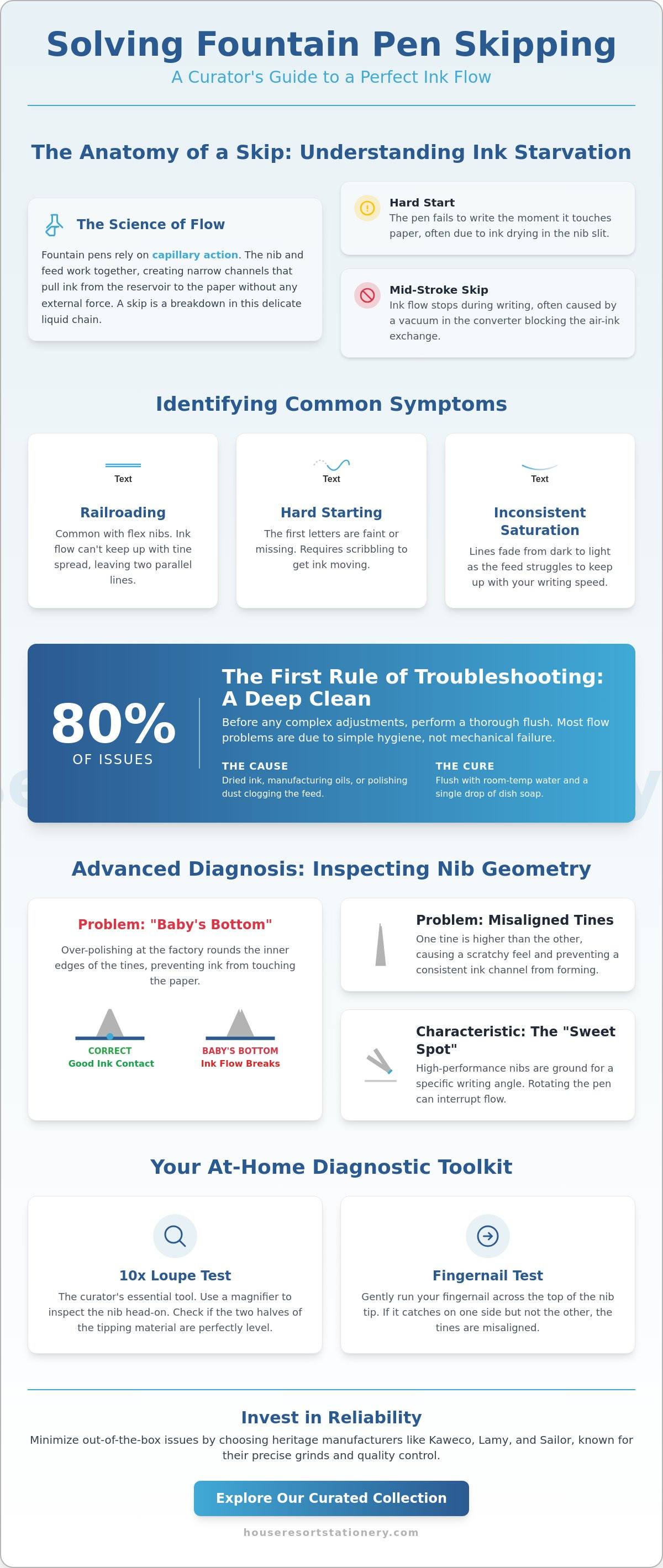
Skipping is the momentary interruption of ink flow during a written stroke. It's a common frustration that leaves gaps in your letters and breaks your creative focus. To understand why this happens, you must first understand the delicate physics of fountain pen mechanics. These tools rely on capillary action; the physical phenomenon where liquid flows through narrow spaces without the assistance of external forces. In a well-tuned pen, the feed and the nib tines work in harmony to pull ink from the reservoir down to the tipping material through these microscopic channels.
When you ask, why is my fountain pen skipping ink, you're usually witnessing a breakdown in this liquid chain. This often manifests in two distinct ways: the hard start and the mid-stroke skip. A hard start occurs when the pen fails to write the moment it touches the paper, often because ink has dried slightly in the nib slit. A mid-stroke skip happens during active writing. This is frequently caused by the air-ink exchange failing. For ink to flow out of the pen, air must flow back into the reservoir to take its place. If a vacuum forms inside your converter, the ink stays trapped at the back, leaving the nib starved and dry.
Common Symptoms of Ink Flow Issues
Identifying the specific behavior of your pen helps narrow down the culprit. Look for these three primary signs:
- Railroading: This is common with flexible nibs. The tines spread to create a wide line, but the ink surface tension breaks, leaving two thin parallel lines with a hollow center.
- Hard Starting: The first letter of every sentence is missing. You find yourself "scribbling" on a scrap piece of paper just to get the ink moving again.
- Inconsistent Saturation: Your lines fade from a rich, dark hue to a pale, watery ghost of the color. This indicates the feed can't keep up with your writing speed.
The First Rule of Troubleshooting: The Deep Clean
Industry professionals often find that roughly 80% of flow issues aren't mechanical failures but simple hygiene problems. If you've just unboxed a brand-new pen from a heritage maker, it might still contain trace amounts of manufacturing oils or polishing dust. A gentle flush with room-temperature water and a single drop of dish soap usually clears these residues instantly. For pens that have been in your collection for a while, skipping often points to a "crust" of dried ink hidden deep within the feed's fins. This microscopic debris blocks the air-ink exchange and prevents the capillary action from functioning. A thorough flush is always the most logical starting point before considering more invasive adjustments.
Nib Geometry and the 'Baby’s Bottom' Phenomenon
The physical contact between the nib and the paper is the final stage of the writing process. If this geometry is flawed, the ink remains trapped in the feed regardless of how well the capillary action is working. One of the most common mechanical reasons why is my fountain pen skipping ink is a condition known as "Baby’s Bottom." This occurs when the tipping material, often referred to as iridium, is over-polished at the factory. The inner edges of the tines become too rounded, creating a microscopic "canyon" where the tines meet. The ink stays tucked inside this curve and never makes contact with the page. Understanding the physics of ink flow helps illustrate how this gap breaks the surface tension required to pull liquid onto the paper fibers.
Beyond polishing issues, simple alignment is often the culprit behind a scratchy skip. If one tine is slightly higher than the other, only one side of the tipping material touches the paper. This creates a sharp, unpleasant sensation and prevents a consistent ink channel from forming. Heritage brands like Sailor and Lamy are celebrated for their precise grinds, but they often feature a specific "sweet spot." This is a narrow range of angles where the nib performs optimally. If your grip rotates the pen even slightly away from this intended angle, the flow may cut out entirely. This isn't a defect; it's a characteristic of a high-performance tool that rewards consistent technique. Explore our curated collection of fine fountain pens to find a nib that matches your natural writing angle.
Diagnosing Nib Alignment at Home
A 10x magnification loupe is the curator's most essential diagnostic tool. Use it to inspect the nib from the front to see if the two halves of the tipping material are level. If you don't have a loupe, the "fingernail test" is a reliable alternative. Gently run your fingernail across the top of the nib tines; if your nail catches on one side but not the other, the tines are misaligned. You should also check for "toe-in" or "toe-out" spread, where the tines are either too tight at the tip or splayed too far apart to maintain a steady flow.
When to Adjust and When to Stop
Smoothing a nib is an irreversible process that requires patience and a steady hand. Beginners should exercise extreme caution with DIY fixes, especially on gold nibs. Gold is significantly softer than stainless steel and can be ruined by just a few strokes of abrasive micromesh. If a pen continues to skip after you've confirmed it's clean and aligned, it's often best to stop. Signs of serious issues, like deep Baby's Bottom or bent tines, are best handled by a professional nibmeister. These experts can reshape the tipping without compromising the integrity of the pen's heritage design.
The Stationery Trio: How Ink and Paper Cause Skipping
A fountain pen does not exist in a vacuum. Even a perfectly tuned nib can fail if the ink and paper aren't compatible with its specific design. When you ask why is my fountain pen skipping ink, you must look at the "Stationery Trio": the pen, the ink, and the paper. These three elements must work in synergy to maintain the capillary flow discussed in previous sections. If one component is out of balance, the writing experience suffers.
Other external factors contribute to flow failure. Hand oils are the most common invisible culprit. As you write, oils from your skin transfer to the page. When your nib hits these patches, the ink cannot penetrate the paper fibers, causing a mid-page skip. Additionally, ink evaporation is a constant threat. Leaving a pen uncapped for even 30 seconds can cause the ink in the nib slit to thicken. This leads to a frustrating hard start that feels like a mechanical skip but is actually just a chemistry problem.
Matching Ink Viscosity to Your Nib
Choosing the right ink is as much about chemistry as it is about color. Shimmering inks, while beautiful, contain microscopic particulates that can easily bridge the narrow channels of a fine feed. For pens that struggle with consistent flow, switching to high-lubrication options like Pilot Iroshizuku bottled ink can provide the necessary glide to overcome minor mechanical resistance. Be cautious with iron gall or permanent inks; their pigment load makes them more clog-prone if the pen isn't flushed regularly.
Paper Texture and Ink Absorption
The surface you write on is the final destination for your ink. Japanese stationery is often engineered specifically to balance smoothness with the right amount of "tooth." This texture helps pull ink from the nib tines through friction. When using a modular system like a Traveler's Notebook, selecting the correct refill weight is essential. Lighter papers may absorb ink too quickly, while heavier, more finished weights might contribute to the very skipping issues you're trying to avoid.
Step-by-Step Guide to Restoring Consistent Flow
Restoring a pen's performance requires a methodical approach that prioritizes the integrity of the nib. If you've identified why is my fountain pen skipping ink but haven't yet reached for your cleaning kit, begin with the most non-invasive procedures. Most flow issues stem from simple blockages or improper seating rather than permanent mechanical damage. By following a structured ritual, you can rule out common variables before considering professional repair services.
First, verify the internal assembly. A loose converter or a poorly seated cartridge disrupts the air-tight seal necessary for consistent capillary action. Ensure the converter is pushed firmly into the section. If you use a piston-filler, cycle the mechanism to ensure no air pockets have formed near the feed. Next, inspect the nib slit under bright light. Microscopic paper fibers can act as a dam, diverting ink away from the tipping material and causing the pen to stutter. A quick wipe with a lint-free cloth often resolves these surface-level interruptions. If the issue persists, switch to a known "wet" ink to rule out chemical incompatibility with your paper.
The Gentle Flush Ritual
A bulb syringe is the most effective tool for a thorough cleaning. It provides the necessary pressure to dislodge stubborn ink particles without damaging the feed's delicate fins. Fill the syringe with room-temperature water and flush the section until the liquid runs clear. If you're switching between high-saturation inks or shimmer colors, consider a dedicated pen flush solution. These formulas contain surfactants that break down dried pigments more effectively than water alone. Once cleaned, wrap the nib in a soft paper towel and let it sit point-down in a glass for an hour. This "wicks" out remaining moisture, preventing your next ink fill from looking diluted and watery.
Clearing Physical Obstructions
If a flush fails to improve the flow, the blockage may be physical. Use a soft-bristled toothbrush to gently scrub the feed's external fins. This removes oils and dried ink that water pressure might miss. For clogs trapped inside the nib slit itself, the "paper shim" technique is a safe curator's trick. Take a thin piece of high-quality, lint-free paper and slide it through the slit from the breather hole toward the tip. This clears debris without the risk of over-spreading the tines. Only "floss" the tines with professional brass sheets if a deep clog is suspected. Over-spreading the tines during this process can permanently increase ink flow, potentially turning a fine nib into a broad one. Maintaining your collection with a regular cleaning schedule ensures your fine fountain pens remain ready for your next creative session.
Investing in Reliability: The Curator’s Choice
Choosing a pen is an act of curation. When you select a tool from a heritage manufacturer, you're investing in decades of engineering refinement. If you've struggled with why is my fountain pen skipping ink in the past, the solution often starts at the point of purchase. Authorized retailers provide a critical layer of protection. They ensure that every instrument meets strict quality standards before it reaches your desk. Many enthusiasts prefer purchasing from boutiques that offer pre-inspection services, as this eliminates the risk of receiving a nib with factory-level alignment issues or polishing defects.
Brands like Lamy, Kaweco, and Sailor have built their reputations on consistency. Their feeds are designed to provide a steady air-ink exchange, reducing the likelihood of starvation during long writing sessions. While mass-produced pens might suffer from inconsistent tolerances, these makers prioritize the tactile relationship between the user and the tool. Starting your journey with a reliable brand minimizes the troubleshooting needed and lets you focus on the joy of the written word.
Why Quality Manufacturing Matters
The choice of materials in a pen's internal structure dictates its long-term reliability. Plastic feeds are common and efficient, but many connoisseurs seek out ebonite feeds for their superior ink-clinging properties. This material provides a wetter, more consistent flow that resists the surface tension breaks common in lesser tools. Even with the best engineering, every writer needs a contingency for their stationary kit. The precision of Blackwing 602 pencils offers a reliable backup for when pens fail or when you're writing on surfaces unfriendly to liquid ink. A manufacturer's warranty from an authorized dealer further secures your investment, providing a path to professional repair should mechanical issues arise.
Curating Your Daily Carry
Reliability is also a matter of environment. Selecting the right nib size for your specific paper type prevents the ink starvation issues discussed earlier. A fine nib might struggle on highly absorbent, fibrous paper, while a broad nib requires a high-capacity feed to avoid mid-stroke gaps. Protection is equally vital. A dedicated pen case isn't just an aesthetic choice; it prevents the nib from drying out and protects the alignment of the tines from accidental knocks. It's these small habits that keep your tools in peak condition.
A well-maintained fountain pen is more than a writing instrument. It's a lifelong companion that rewards your attention to detail. By understanding why is my fountain pen skipping ink and implementing a thoughtful maintenance routine, you ensure that your creative flow remains uninterrupted for years to come. Your collection deserves the care that only a true enthusiast can provide.
Mastering the Art of Consistent Flow
Your journey toward a consistent and wet ink line begins with understanding the delicate physics of your instrument. By identifying the root causes of flow failure, from misaligned tines to the chemistry of your stationery choices, you've gained the expertise to transform a stuttering tool into a reliable creative partner. You no longer need to wonder why is my fountain pen skipping ink; instead, you can focus on the tactile pleasure of the page.
Maintaining a flawless flow is a continuous ritual of care and curation. As an authorized retailer for heritage brands like Lamy, Sailor, and TWSBI, we provide only the most reliable tools to enthusiasts across the United States. Our expertly selected inventory ensures that every purchase meets the high standards your writing deserves. We take pride in being a destination for connoisseurs who value quality and craftsmanship above all else.
Explore our curated collection of fine fountain pens and inks to find your next lifelong companion. With national shipping and a focus on mechanical excellence, we help you build a collection that writes as beautifully as it looks. Your stories are waiting to be told with a pen that never misses a beat.
Frequently Asked Questions
Why does my fountain pen skip only on certain types of paper?
Slick, non-absorbent papers often reveal minor geometry issues like "baby's bottom" because the ink cannot easily bridge the gap between the tines and the surface. In contrast, low-quality, fibrous paper can shed microscopic bits that lodge in the nib slit. This creates a physical blockage that disrupts capillary action. Matching your nib size and ink flow to the specific texture of your stationery is essential for a consistent line.
Can I fix a skipping nib without buying special tools?
Most skipping issues are resolved through a thorough cleaning with room-temperature water and a drop of dish soap. You don't need professional brass shims to clear manufacturing oils or dried ink crust. A simple flush often restores the air-ink exchange. For alignment checks, the "fingernail test" can identify misaligned tines without requiring a 10x loupe. Always start with these gentle methods before considering invasive repairs.
How often should I clean my fountain pen to prevent skipping?
Clean your pen every four to eight weeks to maintain optimal performance. If you use high-pigment, permanent, or shimmering inks, you should flush the feed every time you refill the reservoir. Regular maintenance prevents the build-up of dried ink particulates that lead to why is my fountain pen skipping ink frustrations. A consistent cleaning ritual ensures the capillary channels remain open and responsive.
Does the way I hold the pen affect ink skipping?
Your grip angle significantly impacts how the tipping material contacts the paper. Many heritage nibs have a specific "sweet spot," and rotating the pen away from this center point can cause the ink flow to cut out. Additionally, applying too much pressure can splay the tines too far apart, breaking the surface tension of the ink. A relaxed grip and a consistent writing angle are key to maintaining a steady flow.
Is it normal for a brand new fountain pen to skip right out of the box?
It is surprisingly common for new pens to experience flow issues due to residual manufacturing oils or polishing dust. These microscopic residues are often left behind during the factory finishing process and repel water-based inks. A gentle initial flush with a mild soap solution usually resolves these "out of box" skips. If the skipping persists after cleaning, it may indicate a factory alignment issue that requires professional attention.
What is the best ink for a pen that is prone to skipping?
Highly lubricated "wet" inks are the best choice for pens with stubborn flow. Brands like Pilot Iroshizuku or Aurora Black are engineered with lower surface tension, allowing them to flow more freely through the feed and nib. These inks can often compensate for a slightly dry feed or minor geometry flaws. Avoid shimmering or heavily saturated "dry" inks in pens that already struggle with consistent starting.
Can a damaged feed cause ink skipping, and can it be replaced?
A warped or clogged feed is a frequent cause of chronic skipping. If the feed fins are bent or the internal channels are permanently blocked by dried ink, the air-ink exchange will fail. Most modern pens from manufacturers like Lamy or Kaweco feature friction-fit feeds that are easily replaceable. For vintage or high-end pens, a professional curator or nibmeister can often deep-clean or heat-set the feed to restore its original function.